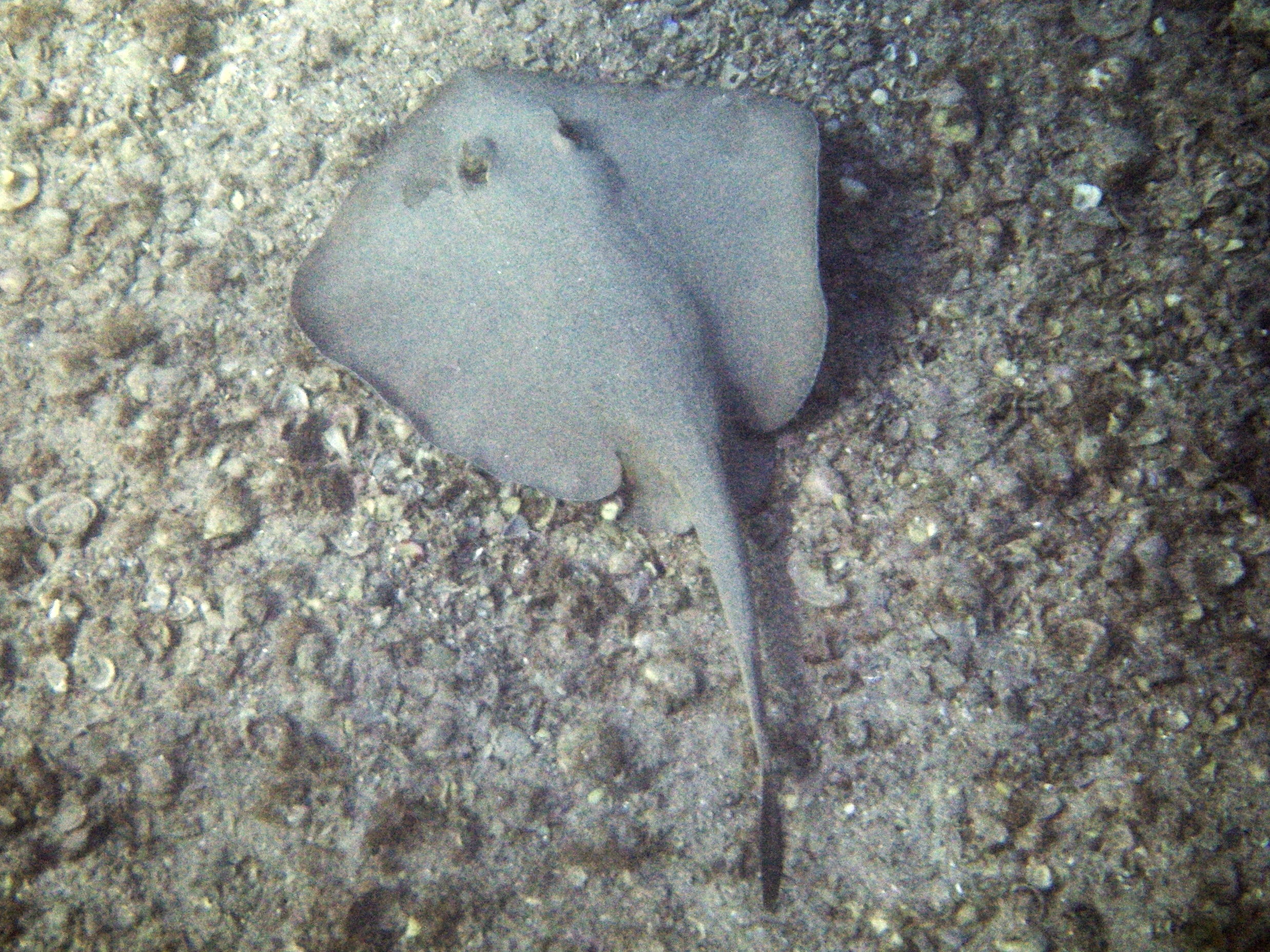
Greenback Stingaree
Urolophus viridis
Photo: Wikimedia Commons (CC) via https://en.wikipedia.org/wiki/Greenback_stingaree
Overview
The Greenback Stingaree is a small benthic ray belonging to the family Urolophidae, characterized by a rounded pectoral disc, a short muscular tail bearing a venomous stinging spine, and a greenish-brown dorsal coloration that gives the species its name. Like other stingarees, it spends much of its time partially buried in sediment, using electroreception and scent to locate small invertebrates and fish that make up its diet. As a mid-level predator, it contributes to the regulation of benthic invertebrate populations and serves as prey for larger sharks and rays.
This species is endemic to Australian waters, occurring in temperate marine environments along the continental shelf. It is typically found on sandy or muddy substrates at moderate depths, where it forages and rests away from strong currents.
The primary threat to the Greenback Stingaree is incidental capture in commercial fishing operations, particularly trawl fisheries operating within its range. As a demersal species with limited mobility and a restricted depth range, it is especially vulnerable to bycatch, and being caught alongside target species in nets dragged along the seafloor. This ongoing pressure has contributed to a declining population trend.
Conservation measures specific to this species remain limited, though it benefits indirectly from broader fisheries management policies in Australian waters, including bycatch reduction devices and spatial closures implemented for other threatened marine species. Monitoring of catch data in trawl fisheries provides some information on population status, though dedicated stock assessments for this species are not extensive.
Given continued fishing pressure and the absence of species-specific protective measures, the outlook for the Greenback Stingaree remains uncertain, with population decline expected to continue unless bycatch mortality is more directly addressed.
The main ongoing threat to the Greenback Stingaree is being accidentally caught in fishing nets and other gear used to catch different fish and sea creatures, even though it isn't the target of these fisheries. This kind of accidental capture, known as bycatch, can injure or kill the animals when they're pulled up with the intended catch. Based on the available information, this threat appears to be stable and ongoing, without clear signs of increasing or decreasing significantly.
Habitat
Other threatened species in UROLOPHIDAE


Threatened in Australia
Frequently asked questions
Why is Greenback Stingaree classified as Vulnerable?
Where does Greenback Stingaree live?
What are the main threats to Greenback Stingaree?
Get weekly conservation intelligence
One short digest a week of the most striking species and country data we ship, plus breaking conservation news paired with our database where it matters.
Free, no spam. One-click unsubscribe in every email.