
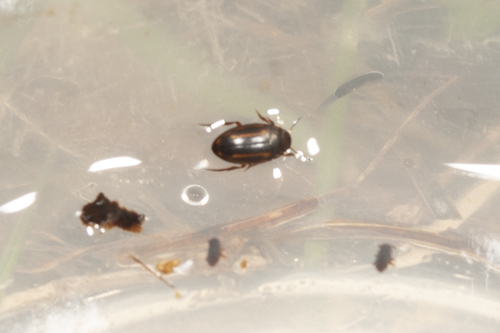
Agabus undulatus
Photo: Wikimedia Commons (CC) via https://en.wikipedia.org/wiki/Agabus_undulatus
Overview
Agabus undulatus is a species of beetle native to the Palearctic, including Europe, where it is only found in Albania, Austria, Belarus, Belgium, Bosnia and Herzegovina, Great Britain including Shetland, Orkney, Hebrides and Isle of Man, Bulgaria, Croatia, the Czech Republic, mainland Denmark, Estonia, mainland France, Germany, Hungary, mainland Italy, Kaliningrad, Latvia, Lithuania, Luxembourg, mainland Norway, Poland, Russia, Slovakia, Slovenia, Sweden, Switzerland, the Netherlands, and Ukraine.
The gegolfde beekkever (Agabus undulatus) is declining primarily due to habitat degradation and loss of clean, flowing water systems. Water pollution from agricultural runoff, urban development, and industrial activities has severely impacted the quality of streams and small rivers where this aquatic beetle depends for survival.
Other threatened species in Dytiscidae
Threatened in Austria
Frequently asked questions
Why is Agabus undulatus classified as Endangered?
Where does Agabus undulatus live?
What are the main threats to Agabus undulatus?
Get weekly conservation intelligence
One short digest a week of the most striking species and country data we ship, plus breaking conservation news paired with our database where it matters.
Free, no spam. One-click unsubscribe in every email.