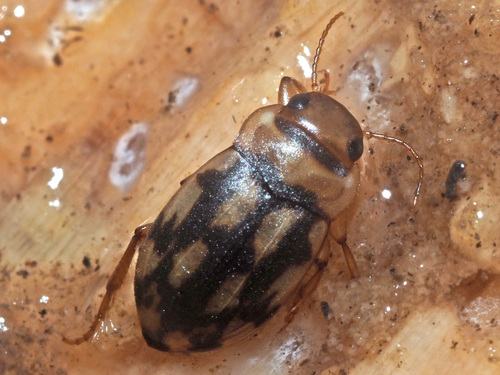
12-spotted diving beetle
Stictotarsus duodecimpustulatus
Photo: Photo: (c) Felix Riegel, some rights reserved (CC BY-NC), uploaded by Felix Riegel
Overview
A detailed profile for this species is sourced from the IUCN Red List of Threatened Species as assessments become available.
Stictotarsus duodecimpustulatus faces severe threats from habitat degradation and water pollution in its limited aquatic environments. The species' extremely restricted range makes it particularly vulnerable to localized environmental changes, with agricultural runoff and urban development posing immediate risks to water quality in its breeding sites.
Habitat
This aquatic beetle inhabits small freshwater pools, ponds, and slow-moving streams with dense aquatic vegetation. The species requires clean, well-oxygenated water with specific chemical conditions for successful reproduction and larval development.
Other threatened species in Dytiscidae
Threatened in Austria
Frequently asked questions
Why is 12-spotted diving beetle classified as Critically Endangered?
Where does 12-spotted diving beetle live?
What are the main threats to 12-spotted diving beetle?
Get weekly conservation intelligence
One short digest a week of the most striking species and country data we ship, plus breaking conservation news paired with our database where it matters.
Free, no spam. One-click unsubscribe in every email.