CRCritically Endangered

Field Macewort

Mannia triandra

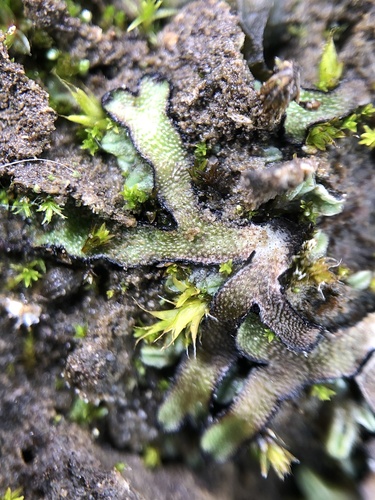
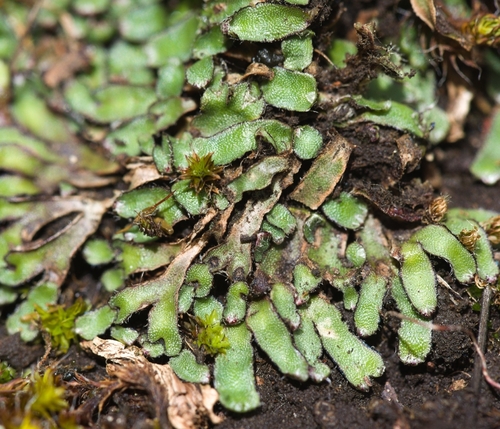
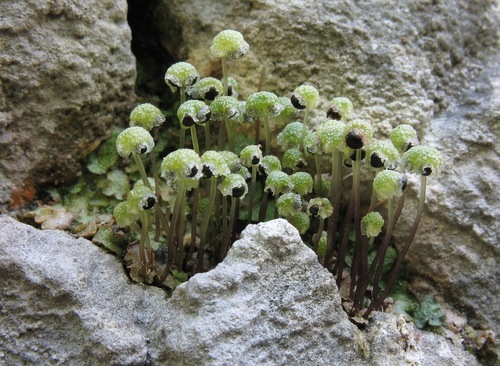
Field Macewort (Mannia triandra) is a small, delicate liverwort characterized by its distinctive three-lobed thallus and tiny, inconspicuous reproductive structures. This bryophyte forms thin, green mats on soil surfaces and plays a crucial role in soil stabilization and moisture retention in its specialized microhabitats.

26

Countries

01Classification

Taxonomy & Classification

Kingdom

Plantae

Phylum

Marchantiophyta

Class

Marchantiopsida

Order

Marchantiales

Family

Aytoniaceae

Genus

Mannia

Field Macewort belongs to the family Aytoniaceae, order Marchantiales, within the Marchantiopsida class.

02Description

Species Profile

Field Macewort (Mannia triandra) is a small, delicate liverwort characterized by its distinctive three-lobed thallus and tiny, inconspicuous reproductive structures. This bryophyte forms thin, green mats on soil surfaces and plays a crucial role in soil stabilization and moisture retention in its specialized microhabitats.

Field Macewort (Mannia triandra) is critically endangered primarily due to habitat loss and degradation of its specialized wetland environments. The species requires very specific moisture and substrate conditions that are increasingly rare due to agricultural intensification, drainage of wetlands, and climate change impacts on hydrological cycles.

Key Facts

IUCN StatusCritically Endangered (CR)
GroupPlants
03Habitat

Habitat & Distribution

Field Macewort inhabits disturbed calcareous soils in open grasslands, field margins, and occasionally on bare earth along pathways or in quarries. The species requires well-drained but periodically moist alkaline substrates with minimal vegetation competition.

04Threats

Threats

!

IUCN Red List: Critically Endangered

Field Macewort (Mannia triandra) is critically endangered primarily due to habitat loss and degradation of its specialized wetland environments. The species requires very specific moisture and substrate conditions that are increasingly rare due to agricultural intensification, drainage of wetlands, and climate change impacts on hydrological cycles.

Agricultural intensification and land use change

HighOngoing

Habitat loss and fragmentation

HighOngoing

Wetland drainage and water management

HighOngoing

Climate change and altered precipitation patterns

MediumOngoing

Pollution and eutrophication

MediumOngoing
07National Status

National vs Global Threat Status

How this species is assessed at the national level compared to its IUCN global status (CR).

CountryNational StatusGlobal StatusComparison
EUVUVulnerableCRCritically EndangeredLower local risk

National Red List data sourced from the National Red List Project (nationalredlist.org, ZSL) and country-specific Red List authorities.

Community

Community Sightings

Report a sighting

No community sightings yet. Be the first to report!

07Sources

Sources & Attribution

How to Cite

IUCN: IUCN (2025). The IUCN Red List of Threatened Species. Version 2025-1. Available at: https://www.iucnredlist.org. doi:10.2305/IUCN.UK.2025-1.RLTS

GBIF: GBIF.org (2025). GBIF Home Page. Available at: https://www.gbif.org

National Red Lists: ZSL (2025). National Red List. Zoological Society of London. Available at: https://www.nationalredlist.org

This page: SpeciesRadar (2025). Field Macewort (Mannia triandra). SpeciesRadar: Intelligence for Earth's Biodiversity. Available at: https://speciesradar.org/species/field-macewort

Full citation guide & data usage terms