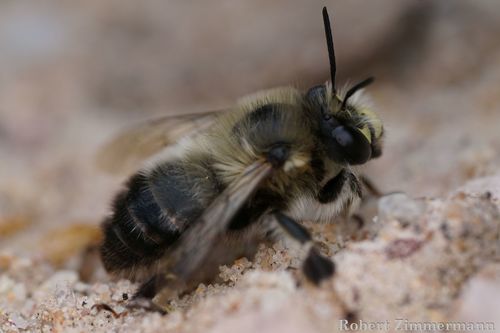
Exaerete frontalis
Photo: Wikimedia Commons (CC) via https://en.wikipedia.org/wiki/Exaerete_frontalis
Overview
A detailed profile for this species is sourced from the IUCN Red List of Threatened Species as assessments become available.
Exaerete frontalis faces severe population decline primarily due to widespread deforestation and habitat fragmentation across its limited range in Central and South American lowland forests. As a cleptoparasitic orchid bee that depends on host species like Eulaema and Eufriesea for reproduction, it is particularly vulnerable to cascading effects when host populations decline from pesticide use and agricultural conversion. The species' specialized ecological niche and dependence on intact forest corridors for maintaining host-parasite relationships makes it extremely sensitive to landscape-level habitat disruption.
Habitat
Exaerete frontalis inhabits lowland tropical rainforests and humid forest edges from sea level to approximately 800 meters elevation, ranging from southern Mexico through Central America to northern South America. This cleptoparasitic orchid bee requires intact forest systems that support diverse populations of its host species, particularly large-bodied euglossine bees that nest in tree cavities and rotting wood.