Haitian Marshfrog
Eleutherodactylus caribe
Overview
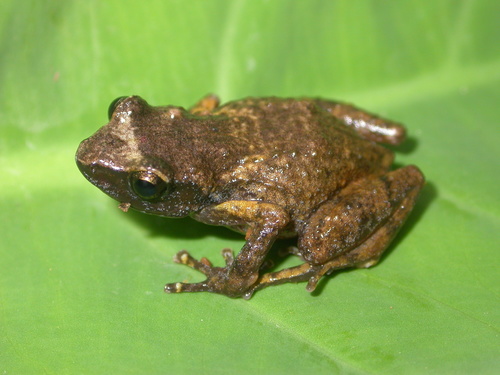
Eleutherodactylus caribe is a critically endangered frog species endemic to the Caribbean region. This small terrestrial frog belongs to the diverse genus Eleutherodactylus, commonly known as rain frogs or coquis, which are characterized by their direct development without a free-swimming tadpole stage. The species inhabits forested areas where it relies on specific microhabitat conditions for survival and reproduction.
Like many Caribbean endemic amphibians, E. caribe faces severe population declines that have led to its classification as Critically Endangered by the IUCN. The primary threats to this species include habitat loss and fragmentation due to deforestation, agricultural expansion, and urban development.
Climate change poses additional challenges through altered precipitation patterns and temperature regimes that affect the humid microenvironments essential for the species' survival. The fungal disease chytridiomycosis, caused by Batrachochytrium dendrobatidis, represents another significant threat to amphibian populations throughout the Caribbean region. Conservation efforts for E.
caribe are limited by the species' restricted range and declining population numbers. Habitat protection and restoration initiatives are crucial for the species' survival, along with monitoring programs to track population trends and disease prevalence. Research into the species' specific ecological requirements and breeding biology is needed to inform targeted conservation strategies.
Without immediate conservation intervention, E. caribe faces a high risk of extinction in the near future.
Eleutherodactylus caribe is threatened primarily by habitat destruction from deforestation and development activities that eliminate the forest environments it requires. Climate change and the amphibian fungal disease chytridiomycosis pose additional serious risks to the remaining populations.
Habitat
This species inhabits forested areas in the Caribbean region, requiring humid microenvironments with appropriate vegetation cover and moisture levels. The frogs are typically found in leaf litter and low vegetation within these forest ecosystems.
Conservation measures underway
Other threatened species in ELEUTHERODACTYLIDAE

Threatened in Haiti
Frequently asked questions
Why is Haitian Marshfrog classified as Critically Endangered?
Where does Haitian Marshfrog live?
What are the main threats to Haitian Marshfrog?
Get weekly conservation intelligence
One short digest a week of the most striking species and country data we ship, plus breaking conservation news paired with our database where it matters.
Free, no spam. One-click unsubscribe in every email.