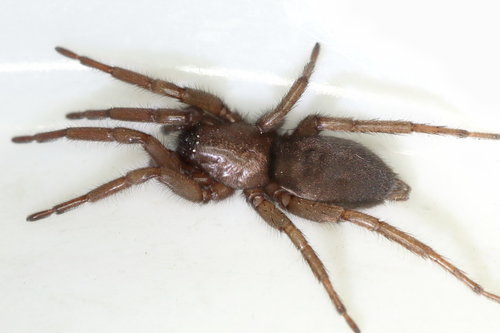
Dull-headed Blood Bee
Sphecodes ferruginatus
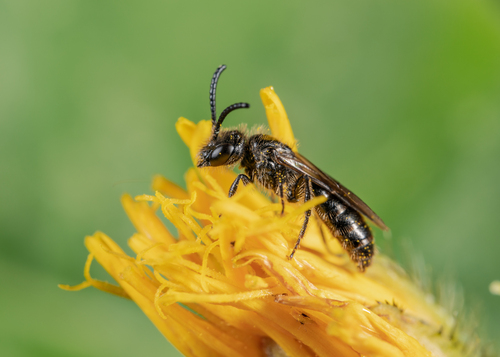
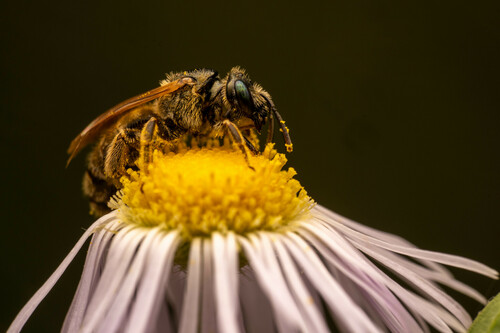
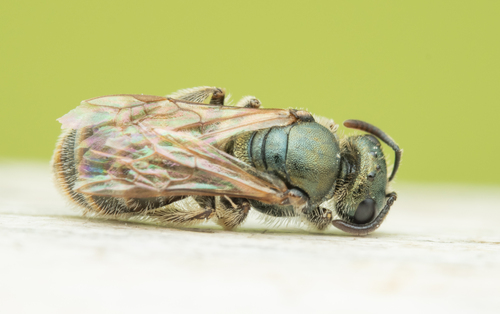
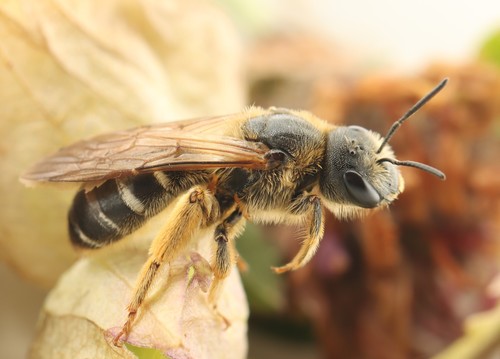
The Dull-headed Blood Bee (Sphecodes ferruginatus) is a small cleptoparasitic bee species characterized by its distinctive reddish-brown coloration and relatively subdued head markings compared to other Sphecodes species. As a brood parasite, it infiltrates the nests of ground-nesting solitary bees, particularly mining bees (Andrena species), where females lay their eggs in host cells to exploit provisioned pollen and nectar stores.
32
Countries
Photo: Wikimedia Commons (CC) via https://en.wikipedia.org/wiki/Sphecodes_ferruginatus
Taxonomy & Classification
Kingdom
Animalia
Phylum
Arthropoda
Class
Insecta
Order
Hymenoptera
Family
Halictidae
Genus
Sphecodes
Dull-headed Blood Bee belongs to the family Halictidae, order Hymenoptera, within the Insecta class.
Species Profile
The Dull-headed Blood Bee (Sphecodes ferruginatus) is a small cleptoparasitic bee species characterized by its distinctive reddish-brown coloration and relatively subdued head markings compared to other Sphecodes species. As a brood parasite, it infiltrates the nests of ground-nesting solitary bees, particularly mining bees (Andrena species), where females lay their eggs in host cells to exploit provisioned pollen and nectar stores.
The Dull-headed Blood Bee faces severe population declines primarily due to habitat loss from agricultural intensification and urban development, which destroys the specialized sandy soils and host plant communities it requires. Climate change and pesticide use further threaten this already rare species, which has an extremely limited distribution and depends on specific host bees for its parasitic lifestyle.
Key Facts
Habitat & Distribution
Sphecodes ferruginatus inhabits flower-rich grasslands, chalk downs, and heathland edges where its host mining bees establish nesting aggregations in well-drained, sparsely vegetated soils. The species requires diverse flowering plant communities that bloom throughout the active season to support both its own nectar needs and those of its essential host species.
Threats
IUCN Red List: Critically Endangered
The Dull-headed Blood Bee faces severe population declines primarily due to habitat loss from agricultural intensification and urban development, which destroys the specialized sandy soils and host plant communities it requires. Climate change and pesticide use further threaten this already rare species, which has an extremely limited distribution and depends on specific host bees for its parasitic lifestyle.
Agricultural intensification
Habitat loss and fragmentation
Urban development
Climate change
Pesticide use
Found in 32 Countries
National vs Global Threat Status
How this species is assessed at the national level compared to its IUCN global status (CR).
| Country | National Status | Global Status | Comparison |
|---|---|---|---|
| EU | LCLeast Concern | CRCritically Endangered | Lower local risk |
| EU | LCLeast Concern | CRCritically Endangered | Lower local risk |
National Red List data sourced from the National Red List Project (nationalredlist.org, ZSL) and country-specific Red List authorities.
Community Sightings
Report a sightingNo community sightings yet. Be the first to report!
Sources & Attribution
How to Cite
IUCN: IUCN (2025). The IUCN Red List of Threatened Species. Version 2025-1. Available at: https://www.iucnredlist.org. doi:10.2305/IUCN.UK.2025-1.RLTS
GBIF: GBIF.org (2025). GBIF Home Page. Available at: https://www.gbif.org
National Red Lists: ZSL (2025). National Red List. Zoological Society of London. Available at: https://www.nationalredlist.org
This page: SpeciesRadar (2025). Dull-headed Blood Bee (Sphecodes ferruginatus). SpeciesRadar: Intelligence for Earth's Biodiversity. Available at: https://speciesradar.org/species/dull-headed-blood-bee