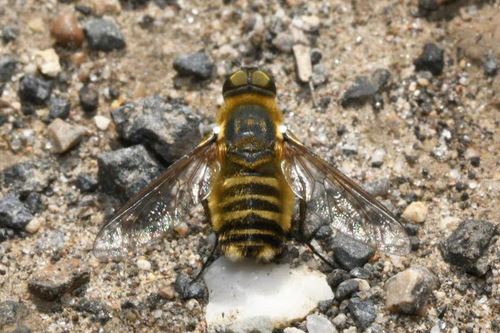
Villa longicornis
Photo: iNaturalist: (c) Gábor Keresztes, some rights reserved (CC BY-NC), uploaded by Gábor Keresztes
Overview
Duistere villa (Villa longicornis) is a distinctive bee fly species characterized by its elongated antennae and dark, robust body with subtle iridescent markings. These agile aerial predators play a crucial ecological role as both pollinators of wildflowers and as parasitoids of ground-nesting solitary bees and wasps during their larval stage.
Villa longicornis faces significant threats from habitat loss and degradation due to agricultural expansion and urbanization across its range. Climate change is altering precipitation patterns and temperature regimes in the arid and semi-arid environments this species depends on, while pesticide use in agricultural areas reduces prey availability and may cause direct mortality.
Habitat
This bee fly species inhabits arid and semi-arid regions, including desert scrublands, dry grasslands, and open sandy areas with sparse vegetation. It is typically found in areas with exposed soil and low-growing shrubs where it can hunt for prey and find suitable sites for reproduction.
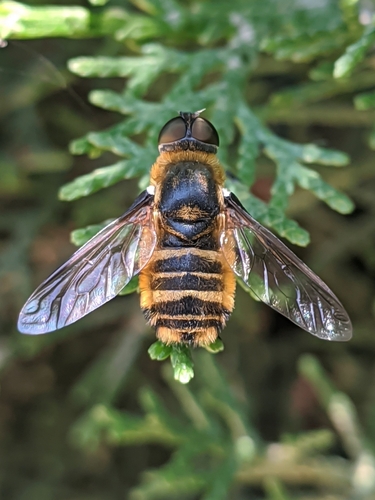
Other threatened species in Bombyliidae
Threatened in Algeria


Frequently asked questions
Why is Villa longicornis classified as Vulnerable?
Where does Villa longicornis live?
What are the main threats to Villa longicornis?
Get weekly conservation intelligence
One short digest a week of the most striking species and country data we ship, plus breaking conservation news paired with our database where it matters.
Free, no spam. One-click unsubscribe in every email.