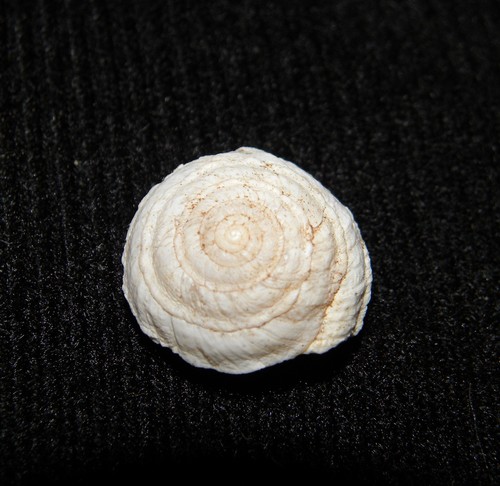
Discula tectiformis
Photo: (c) Sébastien SANT, some rights reserved (CC BY-NC), uploaded by Sébastien SANT
Overview
Discula tectiformis is a small, air-breathing land snail endemic to the island of Madeira, part of a remarkable radiation of endemic Discula species that once thrived in the island's laurel forest ecosystem, known as laurissilva. Its shell is characteristically low-domed and modestly sized, adapted to life among leaf litter, damp rock crevices, and the bark of native laurel trees such as Ocotea foetens and Laurus novocanariensis. This species depends entirely on the humid, shaded microclimate of Madeira's remaining laurel forest fragments, which now persist mainly in steep, less accessible ravines and protected valleys.
Discula tectiformis is classified as Critically Endangered (CR) by the IUCN, reflecting its extremely restricted range, fragmented populations, and continuing decline. Historic clearance of laurissilva for agriculture and grazing, combined with the spread of invasive plants and predatory invertebrates, has severely reduced suitable habitat and isolated remaining colonies, leaving them highly vulnerable to further disturbance. Population trends are decreasing, driven by ongoing habitat degradation and stochastic risks associated with small, isolated subpopulations.
On a more encouraging note, Madeira's laurissilva is now recognised as a UNESCO World Heritage Site, and conservation programmes led by Madeiran forestry and biodiversity authorities have worked to restrict invasive species encroachment and monitor endemic mollusc populations, offering a foundation for targeted recovery efforts. Continued survey work, habitat restoration, and legal protection of remaining forest fragments represent important opportunities to stabilise and eventually improve the species' outlook, provided efforts are sustained and expanded across its known range.
Discula tectiformis faces severe population decline due to habitat destruction from agricultural expansion and urban development across its limited range. The species' restricted distribution makes it particularly vulnerable to localized threats, while collection pressure for the shell trade has further reduced wild populations. Climate change poses an additional threat through altered precipitation patterns affecting the moist microhabitats this terrestrial gastropod requires.
Habitat
This terrestrial snail inhabits moist forest floors and leaf litter in tropical and subtropical regions. It requires specific microhabitat conditions with high humidity and organic matter accumulation typical of undisturbed forest ecosystems.
Conservation measures underway
Other threatened species in GEOMITRIDAE
Threatened in Portugal
Frequently asked questions
Why is Discula tectiformis classified as Critically Endangered?
Where does Discula tectiformis live?
What are the main threats to Discula tectiformis?
Get weekly conservation intelligence
One short digest a week of the most striking species and country data we ship, plus breaking conservation news paired with our database where it matters.
Free, no spam. One-click unsubscribe in every email.