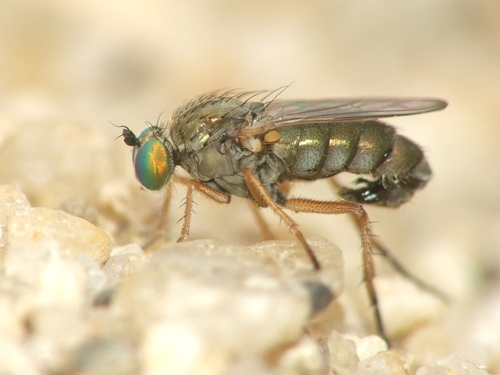
Muscidideicus praetextatus
Photo: (c) Rui Andrade, all rights reserved, uploaded by Rui Andrade
Overview
Muscidideicus praetextatus is a critically endangered parasitoid wasp species with extremely limited distribution and poorly understood ecology. This minute hymenopteran insect belongs to a specialized group of parasitoids that target specific dipteran hosts, likely muscid flies based on its generic name. The species exhibits highly restricted geographic range, making it particularly vulnerable to environmental changes and habitat disturbance.
Current knowledge of its biology, life cycle, and ecological requirements remains fragmentary, hampering effective conservation planning. The species' critical endangerment status reflects both its apparent rarity and the ongoing threats to its habitat. Like many small parasitoid wasps, M.
praetextatus likely plays an important role in regulating populations of its host species, contributing to ecosystem balance within its native range. The primary threats facing this species include habitat loss and degradation, which are particularly devastating for organisms with narrow ecological niches and limited dispersal capabilities. Climate change may pose additional risks by altering the distribution and abundance of both the wasp and its dipteran hosts.
Conservation efforts are hindered by the lack of basic ecological data, including precise habitat requirements, host relationships, and population dynamics. Immediate priorities include conducting comprehensive surveys to better understand the species' distribution, identifying critical habitat areas, and implementing protective measures for known localities. Research into the species' biology and ecological relationships is essential for developing effective long-term conservation strategies.
The primary threats to Muscidideicus praetextatus include habitat loss and degradation within its restricted range. Climate change may further impact the species by disrupting the delicate ecological relationships between the parasitoid wasp and its dipteran hosts.
Habitat
Muscidideicus praetextatus inhabits specialized microhabitats where its muscid fly hosts are present, though specific habitat requirements remain poorly documented. The species likely depends on stable environmental conditions that support both the parasitoid and its host species throughout their respective life cycles.
Other threatened species in Dolichopodidae
Threatened in Denmark

Frequently asked questions
Why is Muscidideicus praetextatus classified as Critically Endangered?
Where does Muscidideicus praetextatus live?
What are the main threats to Muscidideicus praetextatus?
Get weekly conservation intelligence
One short digest a week of the most striking species and country data we ship, plus breaking conservation news paired with our database where it matters.
Free, no spam. One-click unsubscribe in every email.