Madeiran Land Snail
Craspedaria moniziana
Overview
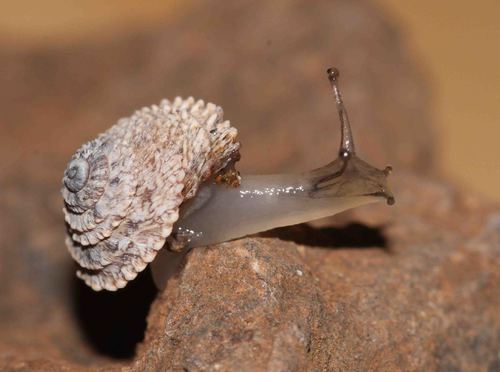
The Madeiran land snail (Craspedaria moniziana) is a small terrestrial gastropod endemic to the Madeira archipelago, a volcanic island group off the northwest coast of Africa renowned for its high concentration of endemic invertebrates. Like many members of the Madeiran land snail fauna, this species is believed to have a modest, coiled shell adapted to the humid, sheltered microhabitats of laurel forest (laurisilva) remnants and rocky ravines, where it shelters among leaf litter, damp rock crevices, and native vegetation that buffers temperature and moisture extremes. The species is classified as Critically Endangered (CR) by the IUCN, with a decreasing population trend, reflecting the severe and ongoing pressure on Madeira's native forest ecosystems.
Its restricted range makes it acutely vulnerable to habitat degradation from agricultural expansion, tourism-related development, and the spread of invasive plants that outcompete native flora essential to its microhabitat. Predation and competition from introduced species, including invasive slugs, rats, and non-native snails, pose additional pressure on remaining populations, compounding the effects of habitat loss. Fragmentation of the laurisilva into isolated patches limits dispersal and gene flow between colonies, heightening extinction risk from localized disturbances such as landslides or wildfire.
On a more encouraging note, portions of Madeira's laurisilva are protected within the Madeira Natural Park and recognized as a UNESCO World Heritage Site, providing a legal and ecological foundation for habitat conservation that benefits this and other endemic invertebrates. Continued monitoring by regional conservation authorities and growing recognition of Madeira's invertebrate biodiversity offer a pathway toward more targeted protective measures for this rare and irreplaceable species.
Craspedaria moniziana faces severe threats from habitat destruction due to urban development and agricultural expansion across its limited range in Madeira. The species' restricted distribution to specific forest habitats makes it extremely vulnerable to environmental changes and human encroachment. Invasive plant species are also degrading the native vegetation communities this endemic snail depends upon for survival.
Habitat
This endemic land snail inhabits the native laurel forests (laurisilva) of Madeira, typically found in humid, shaded areas with rich leaf litter and moss-covered surfaces. The species requires specific microhabitat conditions including stable moisture levels and undisturbed forest floor environments.
Conservation measures underway
Other threatened species in GEOMITRIDAE
Threatened in Portugal
Frequently asked questions
Why is Madeiran Land Snail classified as Critically Endangered?
Where does Madeiran Land Snail live?
What are the main threats to Madeiran Land Snail?
Get weekly conservation intelligence
One short digest a week of the most striking species and country data we ship, plus breaking conservation news paired with our database where it matters.
Free, no spam. One-click unsubscribe in every email.