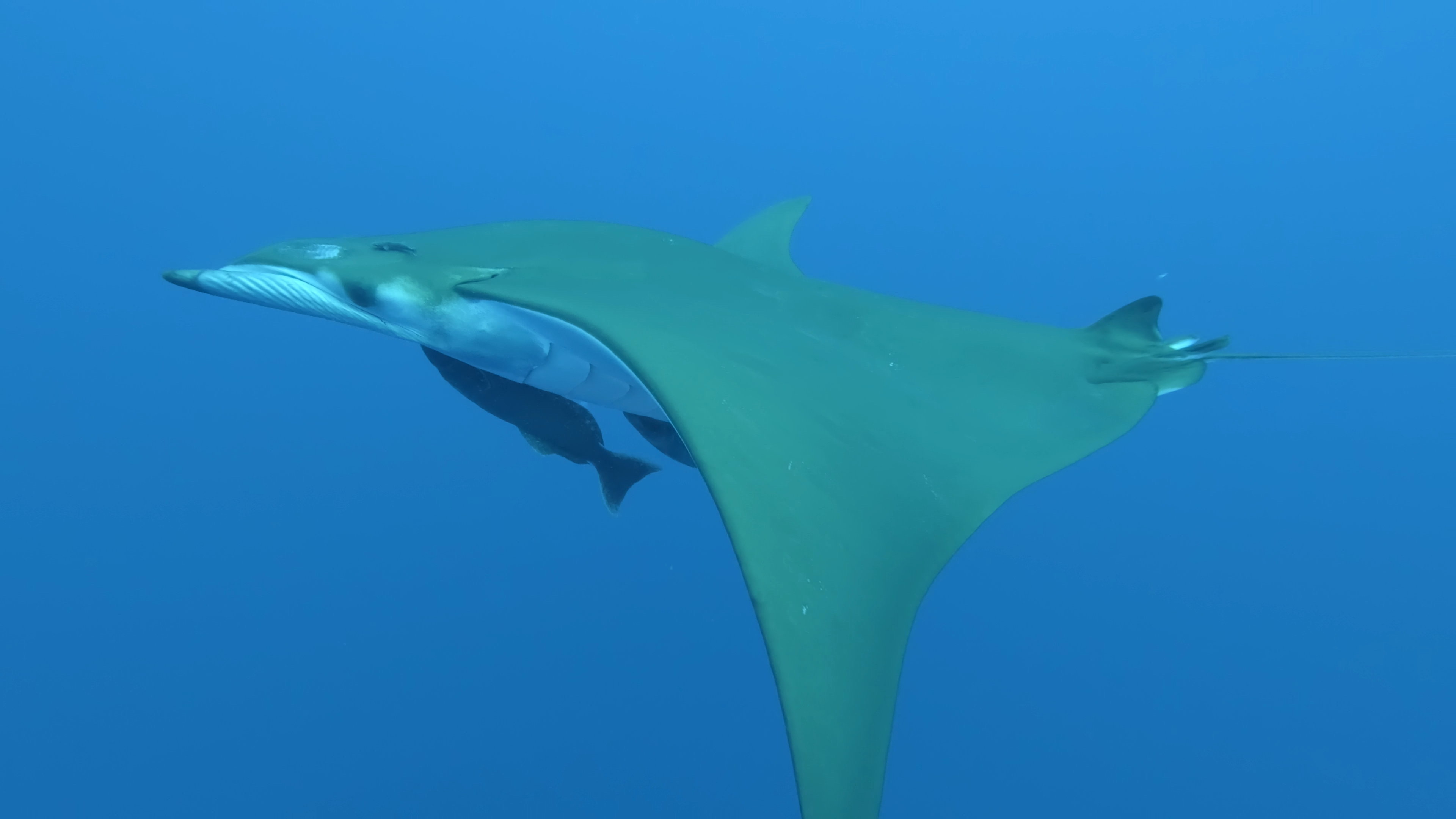
Sicklefin Devil Ray
Mobula tarapacana
Photo: Wikimedia Commons (CC) via https://en.wikipedia.org/wiki/Chilean_devil_ray
Overview
The sicklefin devil ray is a large mobulid ray distinguished by its long, tapering pectoral fins, distinctive cephalic lobes used to funnel plankton toward its mouth, and a whip-like tail. It is one of the deepest-diving mobulid species, with tracking data showing dives to considerable depths, likely in search of deep-water prey such as mesopelagic fish and krill. As a filter feeder, it plays a role in transferring nutrients and energy between deep and surface waters.
Individuals are typically solitary or found in small groups, though aggregations occur at seamounts and oceanic cleaning stations.
This species has a wide but patchy distribution across tropical and temperate oceans, occurring in both oceanic and coastal marine habitats. It has been recorded in waters off dozens of countries, including Mexico, Indonesia, the Philippines, Mozambique, Australia, Brazil, and numerous island nations, often associating with seamounts and offshore pinnacles.
Its slow reproductive rate—producing very few offspring over long intervals—makes populations highly vulnerable to depletion. Targeted fishing for its gill plates, used in some traditional medicine markets, has driven serious declines, compounded by bycatch in gillnet and purse-seine fisheries. Habitat alteration, pollution including microplastics, and shifting prey distributions linked to climate change add further pressure.
Conservation measures include international trade restrictions under CITES Appendix II, protections under the Convention on Migratory Species, and regional fishing bans in some countries. Marine protected areas around seamounts and aggregation sites offer partial refuge, though enforcement remains inconsistent across its range.
Given continued bycatch, slow recovery potential, and limited enforcement of existing protections, the species' population is expected to continue declining in the near term.
The Sicklefin Devil Ray is mainly threatened by fishing: it gets deliberately caught for its gill plates (used in some traditional medicine markets) and is frequently caught by accident in large commercial fishing nets and gillnets meant for other species. It also faces problems from ocean pollution, tiny plastic particles in the water, and shifting ocean conditions caused by climate change, which affect the small sea creatures it depends on for food. These combined pressures appear to be ongoing and intensifying, as fishing activity and climate-related ocean changes continue to grow worldwide.
Habitat
Mobula tarapacana inhabits tropical and subtropical oceanic waters, typically found in epipelagic zones from the surface to depths of 200 meters. This highly migratory species prefers open ocean environments where it feeds on zooplankton and small schooling fish, often aggregating in areas with high productivity such as upwelling zones.
Conservation measures underway
Other threatened species in MOBULIDAE

Threatened in Australia
Frequently asked questions
Why is Sicklefin Devil Ray classified as Critically Endangered?
Where does Sicklefin Devil Ray live?
What are the main threats to Sicklefin Devil Ray?
Get weekly conservation intelligence
One short digest a week of the most striking species and country data we ship, plus breaking conservation news paired with our database where it matters.
Free, no spam. One-click unsubscribe in every email.