
Shorthorned Pygmy Devil Ray
Mobula kuhlii
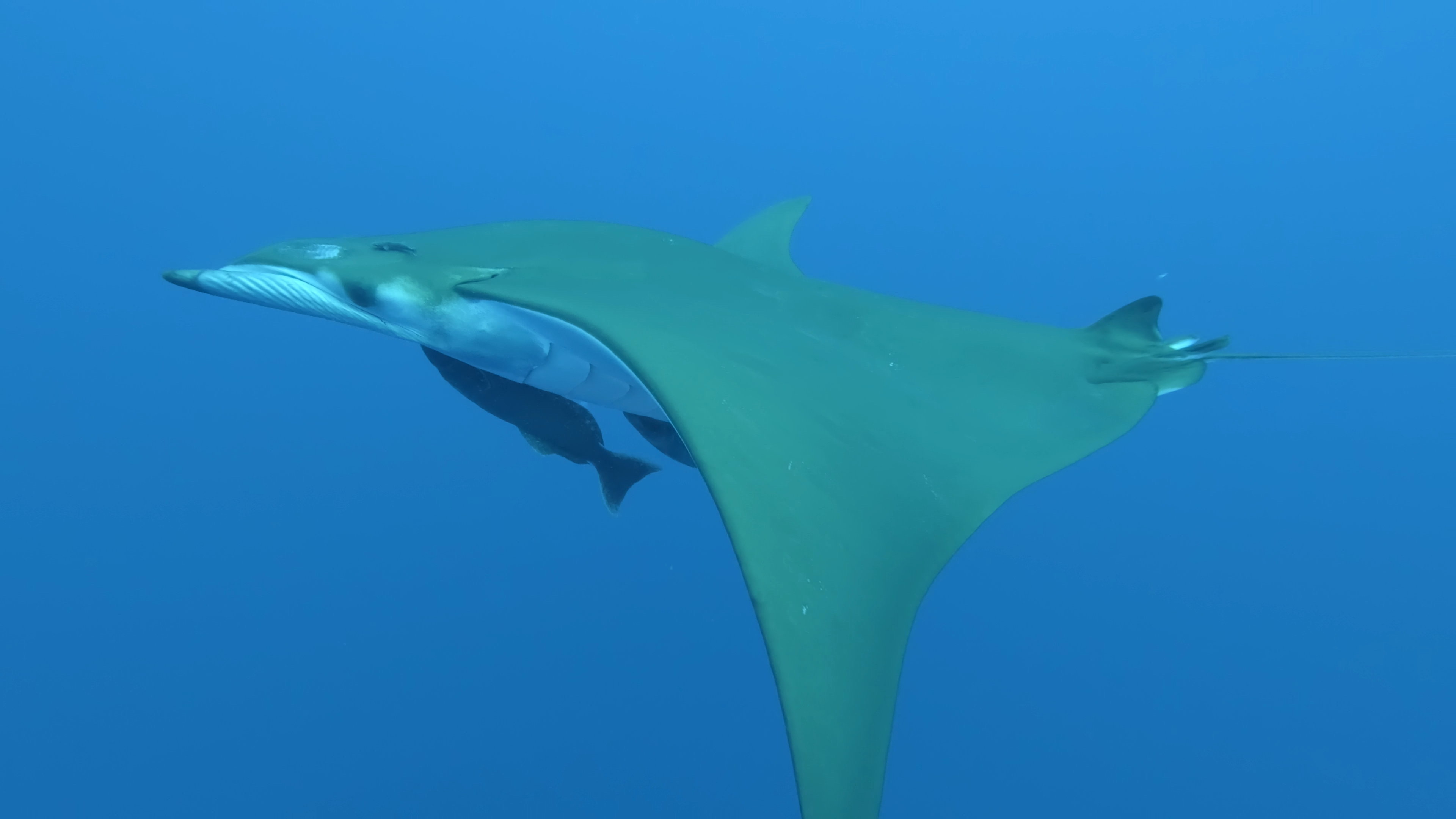
Photo: Wikimedia Commons (CC) via https://en.wikipedia.org/wiki/Mobula_kuhlii
Overview
This small filter-feeding ray is characterized by a diamond-shaped pectoral disc, short cephalic fins used to funnel plankton into its mouth, and a whip-like tail lacking a stinging spine in most individuals. Reaching a disc width of under a meter, it is among the smallest members of the devil ray family. It swims in the water column, often in loose aggregations, feeding on zooplankton and small schooling fish, and in doing so plays a role in transferring energy from planktonic prey to higher trophic levels within reef and coastal food webs.
The species occupies tropical and subtropical coastal and shelf waters across the Indian and western Pacific Oceans, with records spanning South Africa, Mozambique, Tanzania, Madagascar, the Seychelles, Oman, Qatar, India, Sri Lanka, Bangladesh, the Maldives, Myanmar, Thailand, Malaysia, Indonesia, the Philippines, Timor-Leste, Papua New Guinea, Australia, Palau, Solomon Islands, and Vanuatu. It is typically found in nearshore marine and supratidal habitats, often near reefs.
Its low reproductive rate, producing very few offspring over long intervals, makes populations highly vulnerable to targeted and incidental capture in gillnet and purse seine fisheries, where it is caught for its gill plates and meat. Coastal habitat degradation, pollution, and shifting nearshore conditions linked to human development further compress suitable habitat.
Conservation measures include listing under CITES Appendix II, which regulates international trade in ray products, along with regional fishing restrictions and marine protected areas across parts of its range. Enforcement remains inconsistent in many countries. Given continued fishing pressure and slow reproduction, the population is assessed as decreasing, and the species' recovery outlook remains uncertain without stronger regional management.
The Shorthorned Pygmy Devil Ray is mainly threatened by ongoing fishing activity, where it is caught intentionally or as accidental bycatch in nets and gear targeting other species. Its coastal and marine habitat is also being altered, likely through coastal development and changes to nearshore environments, while pollution of unclear origin and nearby land-clearing activities like logging may further degrade the waters it depends on. These pressures appear to be continuous and ongoing rather than easing, suggesting the overall threat level is stable to worsening.
Habitat
Conservation measures underway
Other threatened species in MOBULIDAE

Threatened in Australia
Frequently asked questions
Why is Shorthorned Pygmy Devil Ray classified as Endangered?
Where does Shorthorned Pygmy Devil Ray live?
What are the main threats to Shorthorned Pygmy Devil Ray?
Get weekly conservation intelligence
One short digest a week of the most striking species and country data we ship, plus breaking conservation news paired with our database where it matters.
Free, no spam. One-click unsubscribe in every email.