
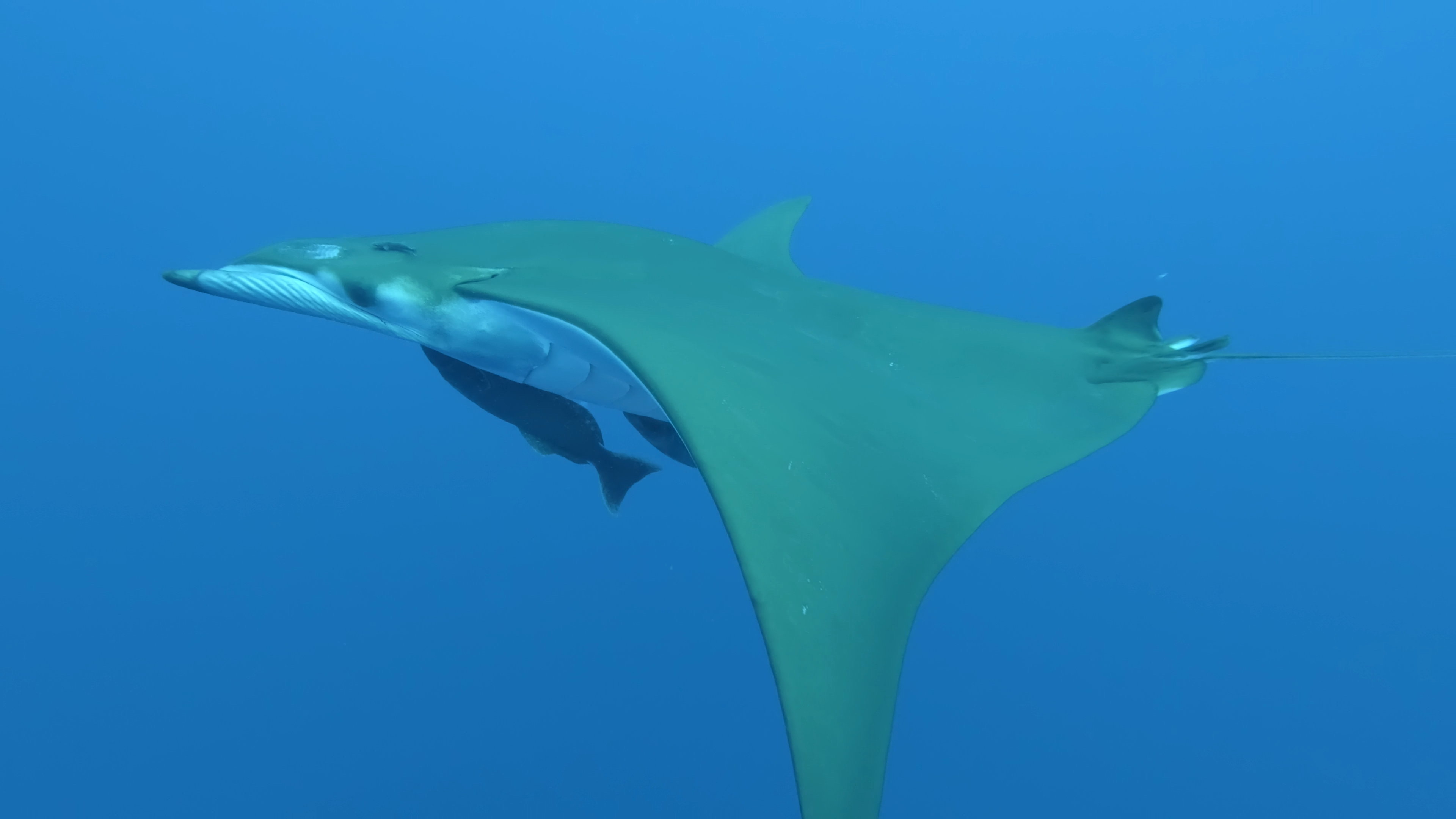
Spinetail Devil Ray
Mobula mobular
Photo: Wikimedia Commons (CC) via https://en.wikipedia.org/wiki/Devil_fish
Overview
The Spinetail Devil Ray is a large filter-feeding elasmobranch characterized by a diamond-shaped body, wide pectoral fins used for propulsion, and a whip-like tail bearing a small spine near its base. It swims in the water column, often solitarily or in small groups, and feeds on zooplankton and small schooling fish by filtering water through specialized gill plates. As a filter feeder, it plays a role in regulating zooplankton populations and serves as an indicator species for the health of pelagic and coastal marine ecosystems.
This species occurs across tropical, subtropical, and temperate marine waters worldwide, inhabiting oceanic, neritic, and coastal zones. It has been recorded in more than fifty countries, spanning the Mediterranean, Indo-Pacific, Atlantic, and Eastern Pacific regions, reflecting a broad but fragmented range tied to productive upwelling zones and seasonal feeding aggregations.
The species faces severe pressure from targeted fisheries seeking its gill plates for use in traditional medicine markets, alongside substantial bycatch mortality in commercial fishing gear such as purse seines and gillnets. Its low reproductive rate—producing few offspring over long intervals—limits recovery from these losses. Additional pressures include coastal habitat degradation, marine pollution, plastic ingestion, and shifts in prey distribution linked to climate change.
Conservation measures include international trade restrictions under CITES Appendix II, regional fishing regulations, and protected area designations in parts of its range, alongside ongoing research into migratory corridors and population structure. Enforcement remains inconsistent across jurisdictions.
Population trends continue to decline, and the species remains classified as Critically Endangered. Without stronger enforcement of bycatch mitigation and trade controls, recovery prospects remain poor given its slow life history.
The Spinetail Devil Ray faces serious pressure from fishing, both from being deliberately caught for its gill plates (used in some traditional medicine markets) and from getting accidentally trapped in nets meant for other fish. It also suffers from a changing ocean environment, including shifting habitats and prey caused by climate change, as well as pollution and plastic in the water, coastal construction damaging its habitat, and disturbance from recreational boating and diving activities. Since all these threats are currently listed as ongoing with no signs of reduction, the overall pressure on this species appears to be intensifying.
Habitat
Giant devil rays inhabit warm temperate and tropical waters of the Mediterranean Sea and eastern Atlantic Ocean, typically found in pelagic environments from surface waters to depths of 700 meters. They prefer areas with high planktonic productivity, often aggregating near seamounts, upwelling zones, and continental shelf edges where their primary prey of small schooling fish and zooplankton concentrate.
Conservation measures underway
Other threatened species in MOBULIDAE
Threatened in Algeria


Frequently asked questions
Why is Spinetail Devil Ray classified as Critically Endangered?
Where does Spinetail Devil Ray live?
What are the main threats to Spinetail Devil Ray?
Get weekly conservation intelligence
One short digest a week of the most striking species and country data we ship, plus breaking conservation news paired with our database where it matters.
Free, no spam. One-click unsubscribe in every email.