
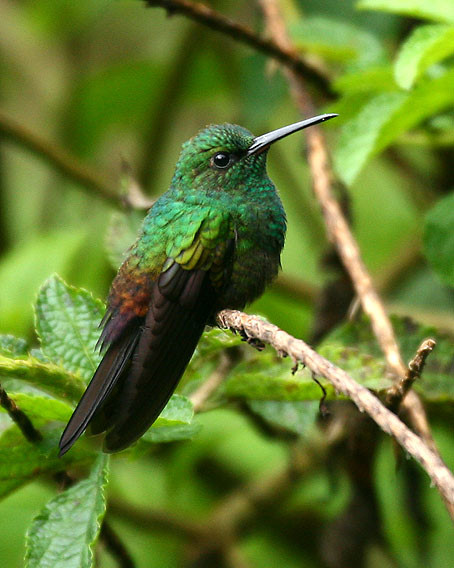
Blue-mantled Thornbill
Chalcostigma stanleyi
Photo: Wikimedia Commons (CC) via https://en.wikipedia.org/wiki/Blue-mantled_thornbill
Overview
The blue-mantled thornbill is a species of hummingbird in the "coquettes", tribe Lesbiini of subfamily Lesbiinae. It is found in Bolivia, Ecuador, and Peru.
The Blue-mantled Thornbill faces significant threats from habitat loss and degradation due to agricultural expansion, mining activities, and infrastructure development in the high-altitude Andean regions it inhabits. Climate change poses an additional risk by altering the delicate páramo and cloud forest ecosystems this specialized hummingbird depends on for foraging and nesting.
Habitat
This species inhabits high-altitude Andean environments including páramo grasslands, cloud forests, and forest edges between 2,400-4,200 meters elevation. It shows particular preference for areas with abundant flowering plants and shrubs that provide nectar sources in these montane ecosystems.
Other threatened species in Trochilidae



Threatened in Bolivia
Frequently asked questions
Why is Blue-mantled Thornbill classified as Vulnerable?
Where does Blue-mantled Thornbill live?
What are the main threats to Blue-mantled Thornbill?
Get weekly conservation intelligence
One short digest a week of the most striking species and country data we ship, plus breaking conservation news paired with our database where it matters.
Free, no spam. One-click unsubscribe in every email.