Pouched Frog
Assa darlingtoni
Overview
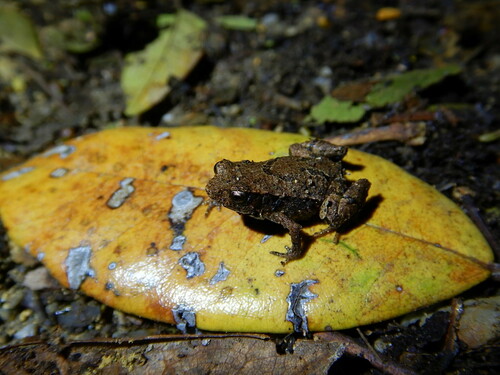
Assa darlingtoni is a small ground-dwelling frog notable for its unusual reproductive strategy: males possess hip pouches into which recently hatched young crawl and complete their development, bypassing a free-living tadpole stage entirely. This direct-development life history removes dependence on standing water for reproduction, distinguishing it from most other frog species. Adults are small, mottled brown, and cryptic, spending most of their time hidden beneath leaf litter, logs, and rainforest debris, where they feed on small invertebrates and contribute to nutrient cycling within the forest floor community.
The species occurs in a restricted range of subtropical and temperate rainforest in the border ranges of northeastern New South Wales and southeastern Queensland, Australia, where it depends on moist, shaded understory conditions and stable leaf-litter habitat.
Its restricted range and specialized microhabitat requirements make it vulnerable to multiple ongoing pressures, including land conversion for crops, altered fire regimes and fire suppression practices, invasive species and associated disease (notably chytrid fungus, a recognized threat to Australian frogs), competition or predation from problematic native species, litter and waste accumulation in habitat, broader habitat shifting linked to environmental change, and increasingly frequent drought conditions that reduce forest floor moisture essential for survival.
Conservation attention has focused on protecting remaining rainforest fragments within its range through reserve management, monitoring population trends, and research into chytrid fungus dynamics in Australian amphibian populations. Habitat protection within existing conservation areas provides some buffer against clearing.
Population trends are currently decreasing, and the species remains classified as Vulnerable. Its narrow distribution and reliance on undisturbed moist forest conditions mean it remains sensitive to climatic variability and habitat degradation, with no clear indication of population recovery at present.
The Pouched Frog faces habitat destruction from farming activities and land clearing, along with harm from wildfires and the way fire is managed in its habitat. It also struggles with competition or predation from invasive species, threats from native pests or diseases, pollution from litter and waste, and increasingly dry conditions caused by drought. These combined pressures on its forest habitat appear to be ongoing and stable rather than clearly worsening or improving.
Habitat
Conservation measures underway
Other threatened species in MYOBATRACHIDAE
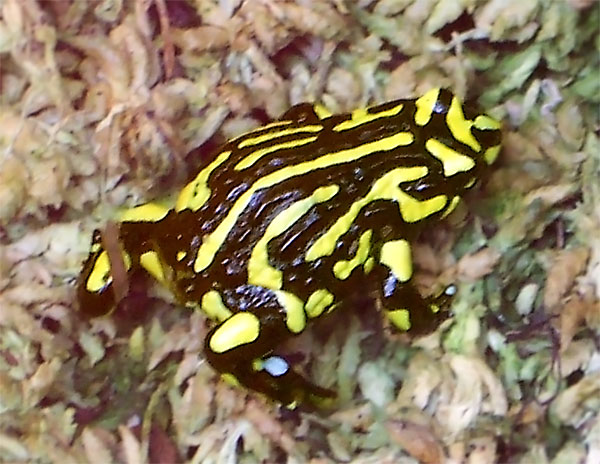

Threatened in Australia
Frequently asked questions
Why is Pouched Frog classified as Vulnerable?
Where does Pouched Frog live?
What are the main threats to Pouched Frog?
Get weekly conservation intelligence
One short digest a week of the most striking species and country data we ship, plus breaking conservation news paired with our database where it matters.
Free, no spam. One-click unsubscribe in every email.