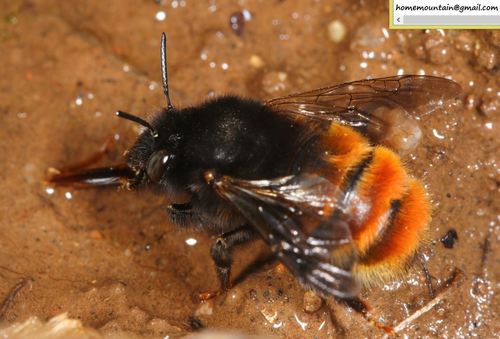
Anthophora plagiata
Photo: iNaturalist: (c) Homemountain/Shan Gui, some rights reserved (CC BY-NC), uploaded by Homemountain/Shan Gui
Overview
Anthophore des murailles (Anthophora plagiata)
The Anthophore des murailles is a robust solitary bee species belonging to the family Apidae. These medium-sized bees are characterized by their dense, often golden-brown hair and strong flying capabilities. As specialized pollinators, they play a crucial role in maintaining plant diversity, particularly favoring flowers in the Lamiaceae family.
Unlike social bees, females construct individual nests in suitable substrates, where they provision cells with pollen and nectar for their developing larvae.
This species exhibits a remarkably broad geographic distribution, spanning from Western Europe through Central Asia to parts of the Indian subcontinent and China. The bee's common name references its preference for nesting in walls, cliffs, and similar vertical surfaces, though it also utilizes sandy banks and other excavatable substrates. It inhabits diverse environments from Mediterranean coastal areas to continental steppes.
Despite its wide range, Anthophora plagiata faces significant population pressures. Habitat modification and urbanization have reduced available nesting sites, while intensive agricultural practices have diminished floral resources. The fragmentation of suitable habitats across its range compounds these challenges, potentially isolating populations and reducing genetic diversity.
Currently, no species-specific conservation programs are documented for this bee. Its endangered status reflects the broader decline affecting many specialized pollinators across Europe and Asia. The species' population trend remains unknown, highlighting critical knowledge gaps that impede effective conservation planning. Without targeted research and habitat protection measures, the long-term survival of this widespread but vulnerable pollinator remains uncertain.
Anthophora plagiata faces severe population declines primarily due to habitat loss from urban development and agricultural intensification in its limited range. The species is particularly vulnerable because of its specialized nesting requirements in old walls and cliff faces, which are increasingly destroyed or modified by human activities.
Other threatened species in Apidae
Threatened in Afghanistan

Frequently asked questions
Why is Anthophora plagiata classified as Endangered?
Where does Anthophora plagiata live?
What are the main threats to Anthophora plagiata?
Get weekly conservation intelligence
One short digest a week of the most striking species and country data we ship, plus breaking conservation news paired with our database where it matters.
Free, no spam. One-click unsubscribe in every email.