Ampelisca aequicornis
Overview
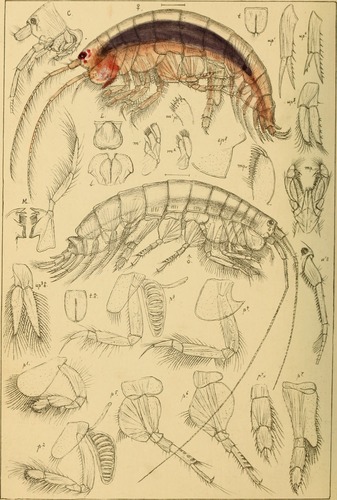
Ampelisca aequicornis is a small benthic amphipod crustacean belonging to the family Ampeliscidae. Like other members of its genus, it likely constructs and inhabits tubes made from sediment and mucous secretions on the seafloor, filtering organic particles and detritus from the water column and surrounding substrate. These amphipods typically form dense colonies that stabilize sediment and provide a food source for bottom-feeding fish, contributing to benthic community structure and nutrient cycling in marine ecosystems.
The species has a wide geographic distribution across the North Atlantic and adjacent regions, with records spanning Portugal, Spain, France, Ireland, the United Kingdom, Norway, Sweden, Iceland, the Faroe Islands, Greenland, Svalbard & Jan Mayen, Morocco, Senegal, Russia, the United States, Canada, and Australia. It occupies marine habitats, generally soft-sediment seafloor environments where it can burrow and construct tubes.
No reliable population figures are currently available, and the population trend is listed as unknown. The species faces multiple ongoing pressures, including coastal development and habitat modification that alter seafloor conditions, bottom trawling and associated sediment disturbance that directly damages tube-dwelling colonies, marine pollution and chemical contamination that affect water and sediment quality, ocean acidification that impacts crustacean physiology, and climate-driven temperature changes that may shift suitable habitat ranges.
Specific conservation programs targeting this species have not been documented, though it may benefit indirectly from broader marine protected area designations, fisheries management measures restricting bottom trawling, and water quality regulations in some of the countries within its range. Given the breadth of ongoing threats and the absence of targeted monitoring or protective measures, the species' long-term trajectory remains uncertain, warranting its classification as Vulnerable and highlighting a need for further population assessment.
Ampelisca aequicornis, a small burrowing crustacean that lives in seafloor sediments, is primarily threatened by coastal construction and development that destroys its seabed habitat, along with bottom trawling that physically disturbs and damages the sediment it depends on. It also faces ongoing harm from chemical pollution washing into the sea, as well as broader changes caused by climate change, including warming waters and ocean acidification, which alter the marine conditions it needs to survive. These threats are currently ongoing and show no signs of easing, suggesting the overall pressure on this species is stable to intensifying.
Habitat
This marine amphipod inhabits shallow coastal waters, typically found in soft sediment environments including sandy and muddy bottoms where it constructs tube-like dwellings. The species occurs in subtidal zones at depths ranging from the lower intertidal to approximately 50 meters, preferring areas with moderate water flow and organic-rich sediments.
Other threatened species in Ampeliscidae
Threatened in Australia
Frequently asked questions
Why is Ampelisca aequicornis classified as Vulnerable?
Where does Ampelisca aequicornis live?
What are the main threats to Ampelisca aequicornis?
Get weekly conservation intelligence
One short digest a week of the most striking species and country data we ship, plus breaking conservation news paired with our database where it matters.
Free, no spam. One-click unsubscribe in every email.