
European Amazon Ant
Polyergus rufescens
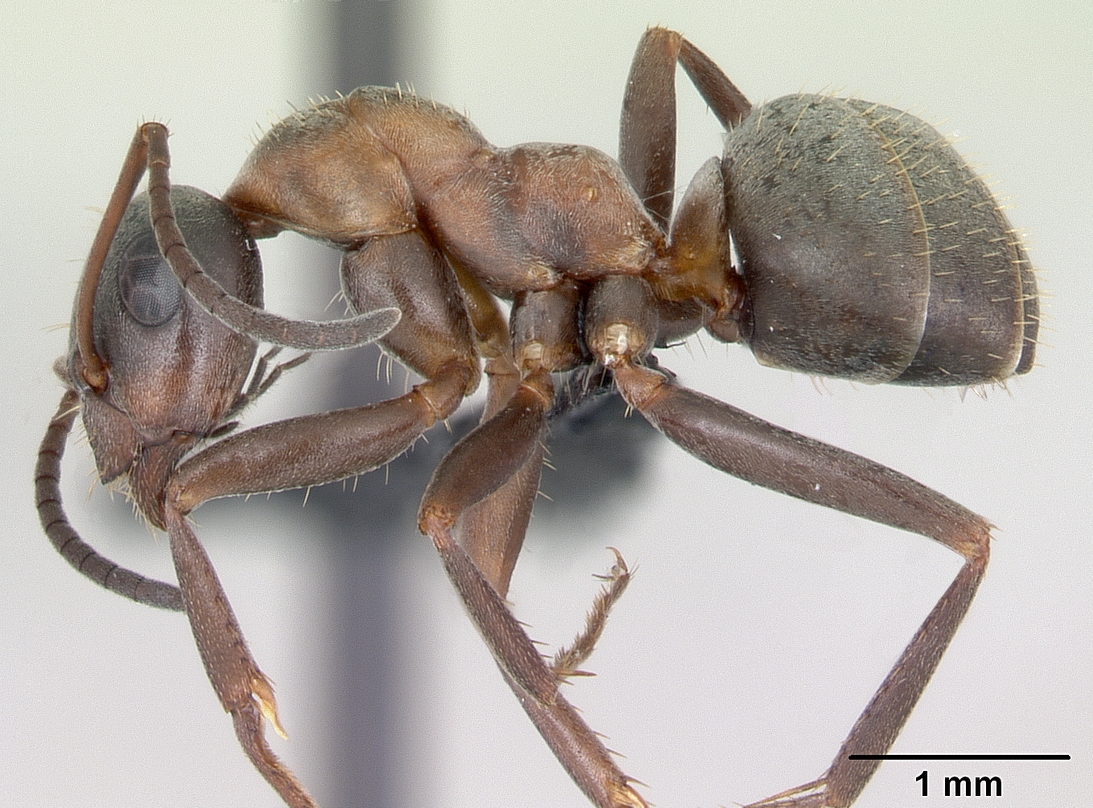
Photo: Wikimedia Commons (CC) via https://en.wikipedia.org/wiki/Polyergus_rufescens
Overview
Polyergus rufescens (Amazonmyra)
Polyergus rufescens, commonly known as the amazonmyra or slave-making ant, is a specialized parasitic ant species characterized by its reddish-brown coloration and distinctive sickle-shaped mandibles. These ants exhibit unique social parasitic behavior, conducting raids on colonies of Formica species to capture pupae, which are then raised as workers in their own nests. The captured ants perform all colony maintenance tasks, as P.
rufescens workers are morphologically adapted solely for raiding and cannot perform basic survival functions like foraging or nest construction.
This species inhabits dry grasslands, forest edges, and sandy soils across parts of Europe and North America. Historically documented in scattered locations throughout these regions, P. rufescens requires specific microhabitat conditions and proximity to suitable host ant colonies for survival.
The species faces significant threats from habitat fragmentation and loss of suitable nesting sites. Agricultural intensification and urban development have reduced available grassland habitats, while the decline of host Formica populations directly impacts P. rufescens survival. Climate change may further restrict suitable habitat ranges, as the species appears sensitive to temperature and moisture variations.
Current conservation efforts remain limited, with most initiatives focused on broader habitat preservation rather than species-specific measures. Research into population dynamics and ecological requirements continues in several European countries.
The outlook for P. rufescens remains uncertain. Its specialized lifestyle, dependence on host species, and habitat requirements make recovery challenging. Without targeted conservation interventions and habitat restoration, population decline may continue, though comprehensive population assessments are needed to determine actual trends.
Based on the available data, the primary threats to amazonmyra (Polyergus rufescens) have not been assessed or documented by researchers. Without a formal threat evaluation, it's unclear what specific dangers this species faces in its natural habitat. The status of threats to this species cannot be determined as increasing, stable, or decreasing due to the lack of assessment data.
Habitat
Other threatened species in Formicidae

Threatened in Albania

Frequently asked questions
Why is European Amazon Ant classified as Endangered?
Where does European Amazon Ant live?
What are the main threats to European Amazon Ant?
Get weekly conservation intelligence
One short digest a week of the most striking species and country data we ship, plus breaking conservation news paired with our database where it matters.
Free, no spam. One-click unsubscribe in every email.