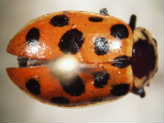
13-spot Ladybird
Hippodamia tredecimpunctata
Photo: Wikimedia Commons (CC) via https://en.wikipedia.org/wiki/Hippodamia_tredecimpunctata
Overview
Hippodamia tredecimpunctata, commonly known as the thirteen-spot ladybeetle, is a species of lady beetle.
The 13-spotted Lady Beetle faces significant population declines due to widespread pesticide use in agricultural systems and habitat loss from intensive farming practices. Climate change is altering the distribution and abundance of their aphid prey, while competition from introduced lady beetle species further threatens native populations across their range.
Habitat
Agricultural fields, grasslands, meadows, and prairie ecosystems where they feed primarily on aphids and other soft-bodied insects. They require diverse plant communities that support abundant prey populations and suitable overwintering sites in leaf litter or under rocks.
Other threatened species in Coccinellidae


Threatened in Åland Islands


Frequently asked questions
Why is 13-spot Ladybird classified as Vulnerable?
Where does 13-spot Ladybird live?
What are the main threats to 13-spot Ladybird?
Get weekly conservation intelligence
One short digest a week of the most striking species and country data we ship, plus breaking conservation news paired with our database where it matters.
Free, no spam. One-click unsubscribe in every email.