
Baudin's Black-cockatoo
Zanda baudinii
Photo: Photo: Wikimedia Commons, CC BY-SA
Overview
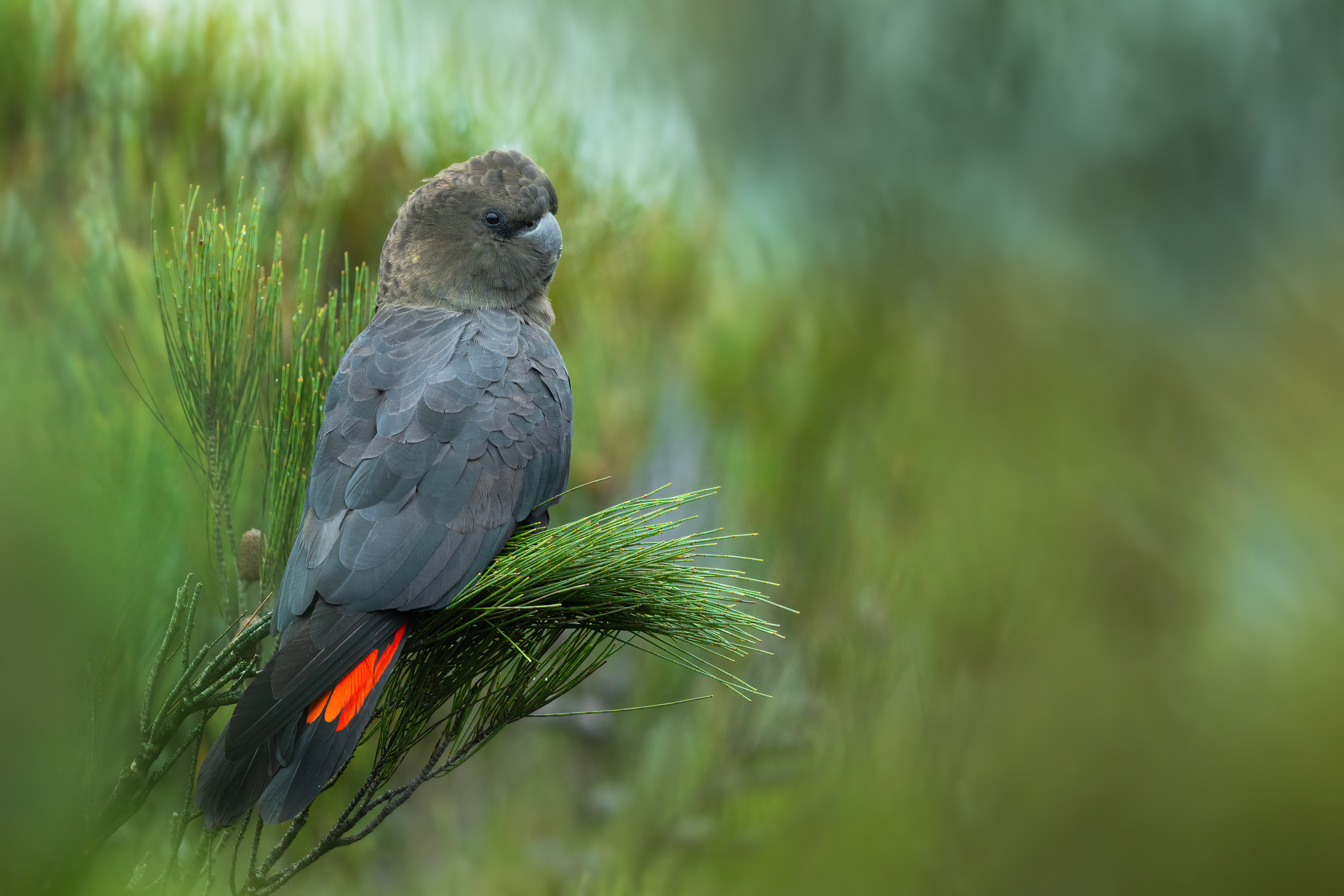
A large, dark cockatoo endemic to southwestern Australia, this species is distinguished by its long, narrow upper mandible—an adaptation specialized for extracting seeds from marri and other eucalypt fruits. Its plumage is predominantly sooty-black with pale scalloped edging on the feathers, and both sexes display white patches on the tail and cheek, though males have pink eye-rings and females show grey-white ones. Highly social, it forages and roosts in flocks, communicating with a distinctive, far-carrying wailing call.
As a seed disperser and forager, it plays a role in shaping the structure and regeneration of the eucalypt forests it inhabits.
Its range is confined to the forests and woodlands of southwestern Western Australia, including temperate forest and adjacent wetland habitats, where it depends heavily on old-growth trees for both feeding and nesting hollows.
The species faces mounting pressure from habitat loss and degradation linked to mining and quarrying activity, which removes and fragments forest cover. Altered fire regimes and fire suppression practices affect forest structure and food availability, while droughts—intensifying with climate variability—reduce the productivity of key food trees. Competition for limited nesting hollows, including pressure from other native species, further constrains breeding success.
Conservation responses include protection of forest habitat within reserves, restrictions on land clearing in some areas, installation of artificial nest hollows to offset natural hollow shortages, and ongoing population monitoring to track breeding success and range shifts.
Despite these measures, the population continues to decline, and the species is classified as Critically Endangered. Its long-term outlook remains precarious, contingent on sustained habitat protection, hollow availability, and mitigation of climate-driven pressures on its forest ecosystem.
Baudin's Black-cockatoo faces habitat destruction from mining and quarrying operations, along with damage from bushfires and fire management practices that destroy the forests it depends on. It also struggles with competing native species and diseases, as well as increasingly severe droughts that affect food and water availability. These threats show no signs of easing and appear to be ongoing and persistent pressures on the species.
Habitat
Conservation measures underway
Other threatened species in CACATUIDAE


Threatened in Australia
Frequently asked questions
Why is Baudin's Black-cockatoo classified as Critically Endangered?
Where does Baudin's Black-cockatoo live?
What are the main threats to Baudin's Black-cockatoo?
Get weekly conservation intelligence
One short digest a week of the most striking species and country data we ship, plus breaking conservation news paired with our database where it matters.
Free, no spam. One-click unsubscribe in every email.