
Gang-gang Cockatoo
Callocephalon fimbriatum
Photo: Wikimedia Commons (CC) via https://en.wikipedia.org/wiki/Gang-gang_cockatoo
Overview
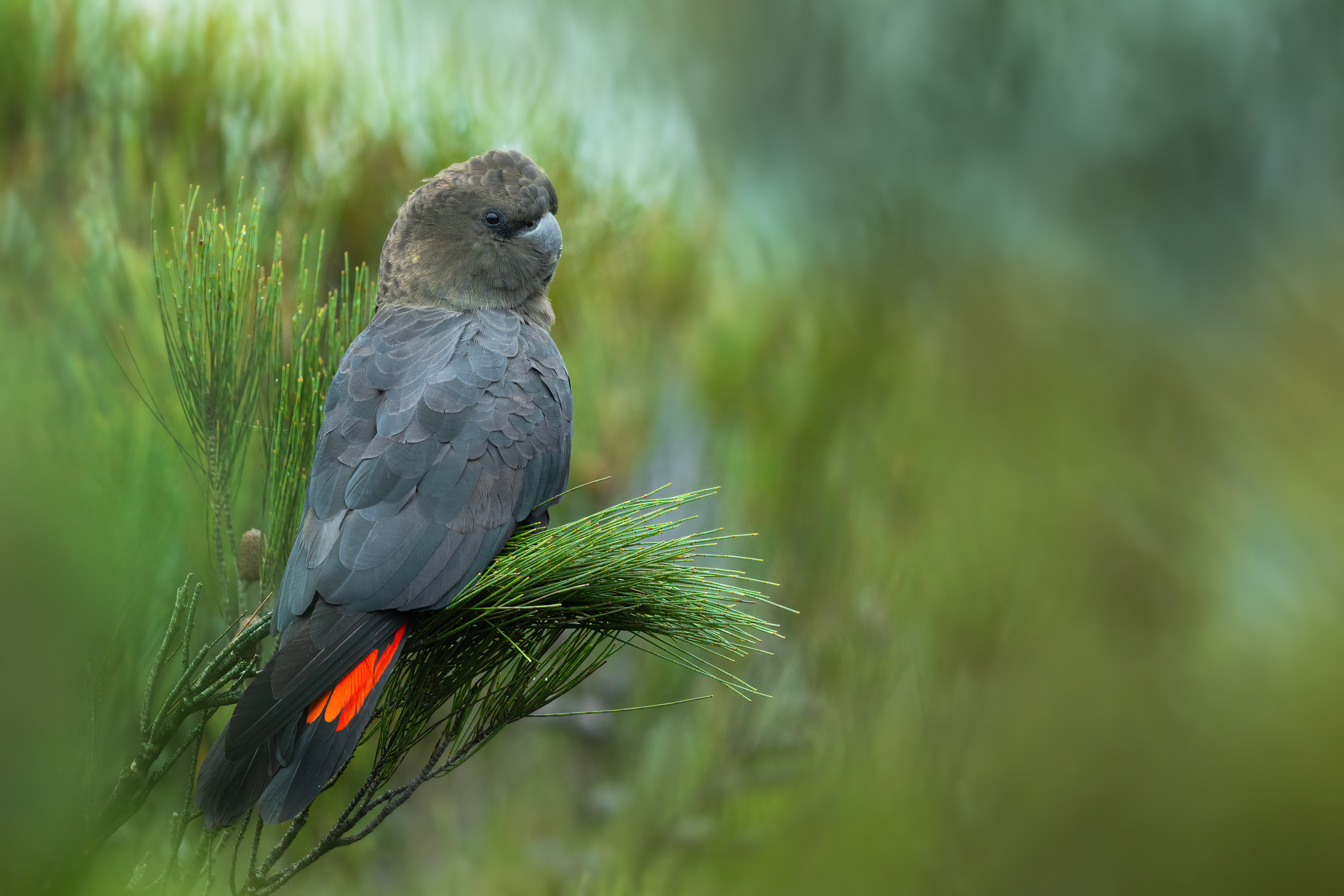
Callocephalon fimbriatum is a medium-sized cockatoo distinguished by pronounced sexual dimorphism: males display a bright red, wispy-crested head against slate-grey plumage, while females and juveniles show grey plumage overall with fine yellow-orange barring on the underparts. Both sexes have a distinctive rasping, creaking call often described as sounding like a rusty hinge. The species is primarily arboreal, feeding on eucalypt seeds, berries, insects, and larvae, and nests in hollows of large, old eucalypts.
As a seed disperser and cavity-nesting species, it contributes to forest regeneration dynamics and indicates the health of mature forest ecosystems.
The species is endemic to southeastern Australia, occupying tall montane and sub-alpine eucalypt forests during breeding season, with seasonal movement to lower-elevation woodlands and urban gardens in autumn and winter, particularly in and around Canberra and parts of New South Wales and Victoria.
Its population is declining due to two primary pressures. Ongoing urban and housing development is reducing and fragmenting forest habitat, particularly lowland woodland used for winter foraging. Fire, including altered fire regimes and increasingly severe bushfire seasons, has destroyed significant areas of nesting and foraging habitat, notably during the 2019–2020 Australian bushfires, which burned substantial portions of the species' breeding range.
Conservation responses include habitat protection within reserves, nest-box programs to offset the loss of natural tree hollows, monitoring of breeding populations, and post-fire habitat recovery assessments. Research into the species' movement ecology and hollow-dependency is ongoing to inform habitat management.
The species is currently classified as Vulnerable, with a decreasing population trend. Continued habitat loss and fire frequency suggest the population trajectory will remain under pressure without sustained habitat protection and restoration.
The Gang-gang Cockatoo is losing its forest homes as more land is cleared and developed for housing and urban growth, leaving fewer old trees with the hollows it needs for nesting. Bushfires are also destroying large areas of its habitat and food sources, making it harder for the species to recover between fire events. Both of these threats are ongoing and show no signs of easing.
Habitat
Conservation measures underway
Other threatened species in CACATUIDAE


Threatened in Australia
Frequently asked questions
Why is Gang-gang Cockatoo classified as Vulnerable?
Where does Gang-gang Cockatoo live?
What are the main threats to Gang-gang Cockatoo?
Get weekly conservation intelligence
One short digest a week of the most striking species and country data we ship, plus breaking conservation news paired with our database where it matters.
Free, no spam. One-click unsubscribe in every email.