
Elongated Tortoise
Indotestudo elongata
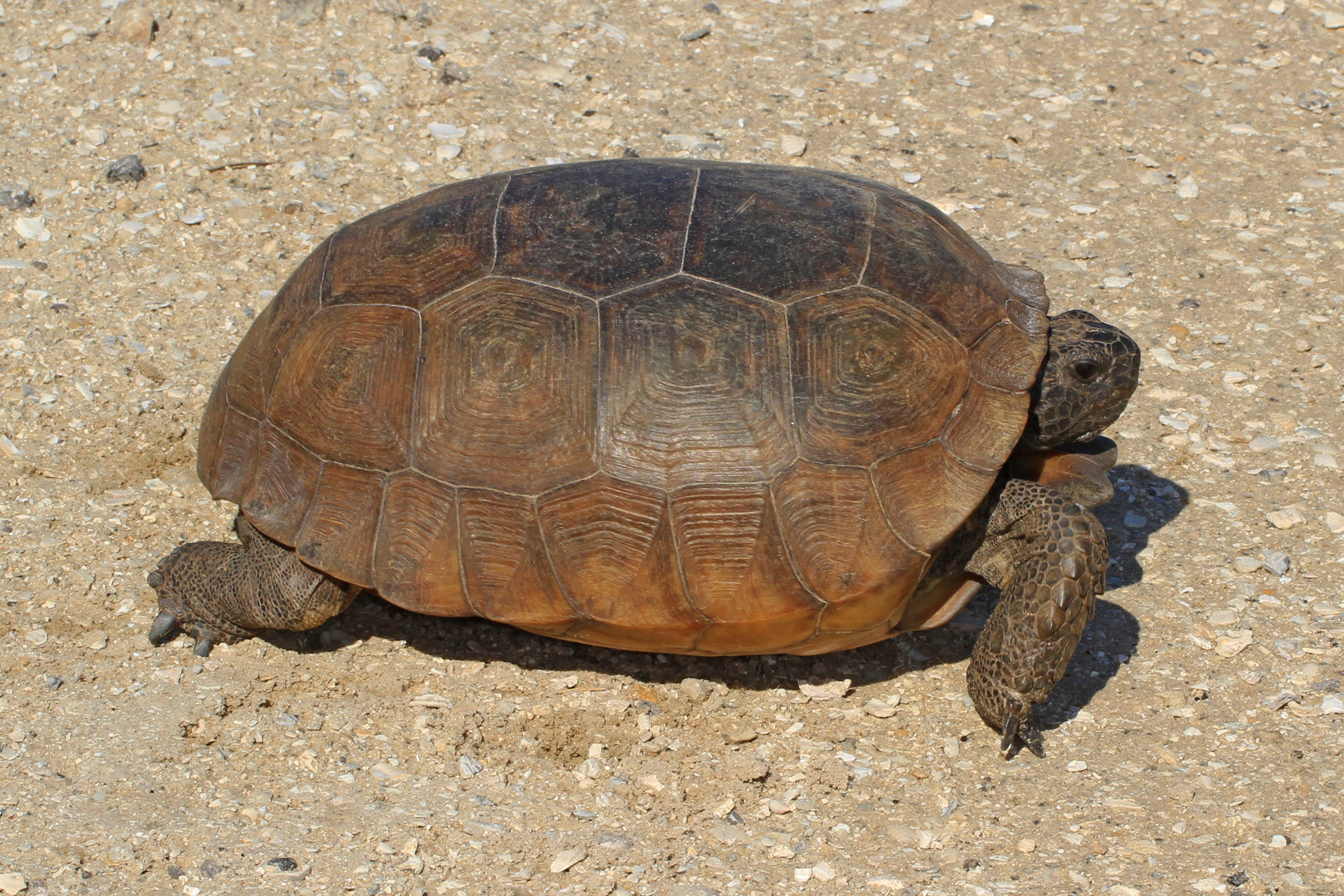
Photo: Wikimedia Commons (CC) via https://en.wikipedia.org/wiki/Elongated_tortoise
Overview
The elongated tortoise is a medium-sized terrestrial reptile characterized by its distinctive elongated, domed carapace that can reach 35 centimeters in length. The shell displays yellow markings on a dark brown or black background, while the head and limbs are typically yellowish-brown. These tortoises are primarily herbivorous, feeding on fruits, flowers, leaves, and fungi, playing an important role as seed dispersers in their forest ecosystems.
This species inhabits subtropical and tropical dry forests, as well as areas near permanent rivers and streams across South and Southeast Asia. Its range extends from the Indian subcontinent through Myanmar, Thailand, Laos, Cambodia, and Vietnam, reaching into southern China and Malaysia. The tortoises prefer forest floor environments with dense vegetation cover.
The species faces severe population decline due to multiple pressures. Intensive hunting and trapping for the international pet trade and traditional medicine markets represents the primary threat. Agricultural expansion, particularly crop cultivation, fragments and destroys habitat. Logging operations reduce forest cover, while collection for food consumption continues across much of its range.
Conservation efforts include legal protection in most range countries and inclusion in CITES Appendix II, regulating international trade. Several protected areas encompass portions of the species' habitat, and captive breeding programs operate in various facilities. However, enforcement of protection measures remains inconsistent.
The current trajectory indicates continued population decline despite conservation measures. Habitat loss persists, and illegal collection continues to impact wild populations significantly, suggesting the species' critical status will likely persist without substantially enhanced protection efforts.
The Elongated Tortoise faces serious threats from people clearing forests for farming and logging trees for wood, which destroys the places where these tortoises live. Hunters also actively capture these tortoises from the wild, likely for food or to sell as pets. All of these threats are currently ongoing and appear to be continuing at steady levels rather than getting better or worse.
Habitat
Conservation measures underway
Other threatened species in TESTUDINIDAE


Threatened in Bangladesh



Frequently asked questions
Why is Elongated Tortoise classified as Critically Endangered?
Where does Elongated Tortoise live?
What are the main threats to Elongated Tortoise?
Get weekly conservation intelligence
One short digest a week of the most striking species and country data we ship, plus breaking conservation news paired with our database where it matters.
Free, no spam. One-click unsubscribe in every email.