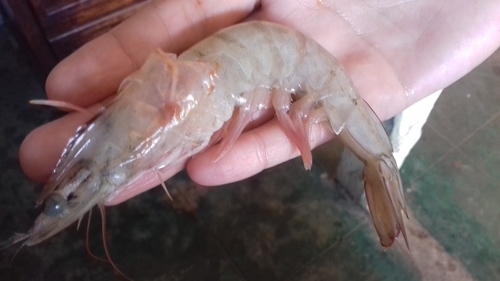
Central American white shrimp
Penaeus occidentalis
Photo: (c) ANGELES FELIX, some rights reserved (CC BY-NC), uploaded by ANGELES FELIX
Overview
The western white shrimp (Penaeus occidentalis) is a marine crustacean species found in the eastern Pacific Ocean, primarily along the western coasts of Central and South America. This commercially important shrimp species inhabits coastal waters and estuarine environments, playing a significant ecological role in marine food webs as both predator and prey. The species has been classified as Critically Endangered by the IUCN, indicating an extremely high risk of extinction in the wild.
The primary threats to western white shrimp populations include habitat degradation from coastal development, pollution from agricultural runoff and industrial activities, and overfishing pressure from commercial shrimp fisheries. Climate change impacts, including ocean acidification and rising sea temperatures, may further stress remaining populations. Coastal wetland destruction and mangrove deforestation have eliminated crucial nursery habitats essential for juvenile development.
Water quality degradation from urban and agricultural sources has compromised the species' breeding and feeding grounds. The shrimp's limited geographic range makes it particularly vulnerable to localized threats. Conservation efforts for this species remain limited, with most focus directed toward general marine protected area establishment and fisheries management regulations.
Habitat restoration projects targeting coastal wetlands and mangrove ecosystems may benefit the species, though specific recovery programs have not been widely implemented. Research into population dynamics and breeding requirements is needed to develop effective conservation strategies for this critically endangered crustacean.
Western white shrimp face severe threats from coastal habitat destruction, particularly the loss of mangrove nursery areas due to development and aquaculture expansion. Commercial overfishing and water pollution from agricultural and industrial sources have further degraded their marine environment. Climate change impacts, including ocean warming and acidification, compound these existing pressures on the critically endangered population.
Habitat
Western white shrimp inhabit shallow coastal waters, estuaries, and lagoons along the eastern Pacific coast. Juvenile shrimp depend on mangrove systems and coastal wetlands for nursery habitat, while adults move to deeper nearshore waters for feeding and reproduction.
Other threatened species in Penaeidae
Threatened in China
Frequently asked questions
Why is Central American white shrimp classified as Critically Endangered?
Where does Central American white shrimp live?
What are the main threats to Central American white shrimp?
Get weekly conservation intelligence
One short digest a week of the most striking species and country data we ship, plus breaking conservation news paired with our database where it matters.
Free, no spam. One-click unsubscribe in every email.