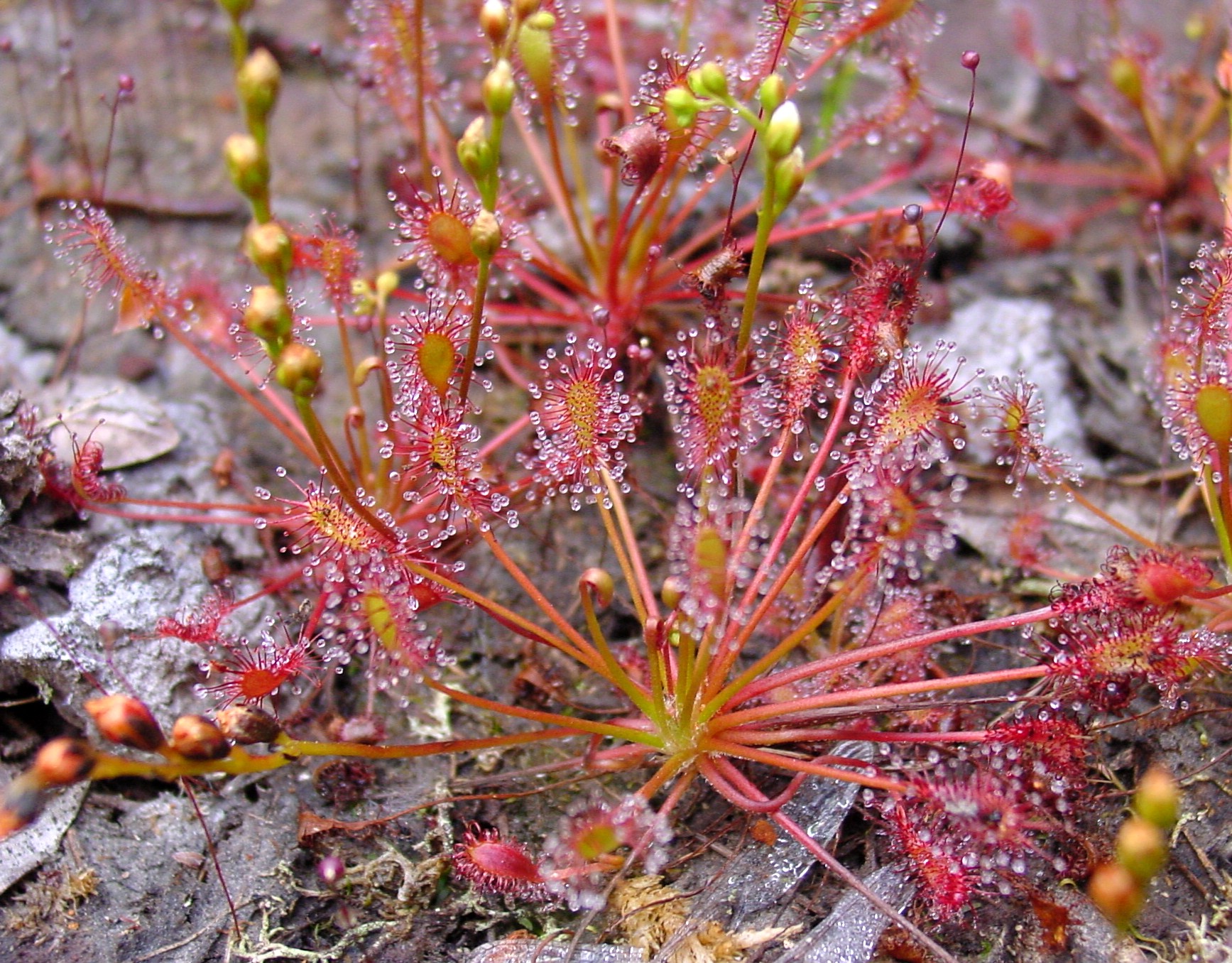
Oblong-leaved Sundew
Drosera intermedia
Photo: Photo: Wikimedia Commons, CC BY-SA
Overview
This carnivorous perennial herb produces a basal rosette of spatulate to oblong leaves covered in reddish glandular tentacles that secrete a sticky mucilage. Small insects become trapped on these leaves, which then slowly curl around the prey, allowing the plant to digest it and absorb nutrients—an adaptation that compensates for the nitrogen- and phosphorus-poor substrates it inhabits. Flowers are small and white, typically opening only in sunlight.
Within its ecosystem, the species contributes to invertebrate population regulation and is characteristic of specialized, nutrient-limited plant communities.
The species has an unusually wide distribution, occurring across parts of Europe, North America, South America, Africa, and Asia, including the Netherlands, Germany, Sweden, Canada, the United States, Japan, Australia, and many other countries. It is restricted to acidic, waterlogged, terrestrial habitats such as bogs, fens, and peatland margins, where competition from larger plants is limited by low nutrient availability.
Despite this broad range, the species is classified as Critically Endangered, reflecting severe pressure on its specialized habitat. Wetland drainage and conversion for agriculture or development, peat extraction and bog mining, agricultural runoff, and eutrophication all degrade or destroy the nutrient-poor conditions the plant requires. Climate change, through altered precipitation and hydrology, further threatens the stability of remaining bog systems.
Conservation efforts include legal protection of peatland habitats in several countries, wetland restoration projects, designation of protected reserves, and monitoring by botanical and conservation organizations. Population trend data remain unknown, limiting precise assessment of recovery or decline.
Given the ongoing, multifaceted degradation of peatland ecosystems worldwide, the species' long-term outlook remains uncertain, with continued habitat loss posing a persistent risk even where legal protections exist.
The Oblong-leaved Sundew is losing its wetland and bog homes as they are drained, dug up for peat, and affected by runoff from farming nearby, while pollution and nutrient buildup in the water further degrade its habitat. Changing rainfall patterns linked to a warming climate are adding extra stress by disrupting the wet, boggy conditions this plant needs to survive. These combined pressures appear to be ongoing and show signs of intensifying rather than easing.
Habitat
Acidic bogs, fens, wet sandy shores, and nutrient-poor wetlands with consistently moist to waterlogged soils. Typically found in sphagnum moss communities and shallow water margins of ponds and lakes in temperate regions.
Other threatened species in Droseraceae


Threatened in Åland Islands


Frequently asked questions
Why is Oblong-leaved Sundew classified as Critically Endangered?
Where does Oblong-leaved Sundew live?
What are the main threats to Oblong-leaved Sundew?
Get weekly conservation intelligence
One short digest a week of the most striking species and country data we ship, plus breaking conservation news paired with our database where it matters.
Free, no spam. One-click unsubscribe in every email.