
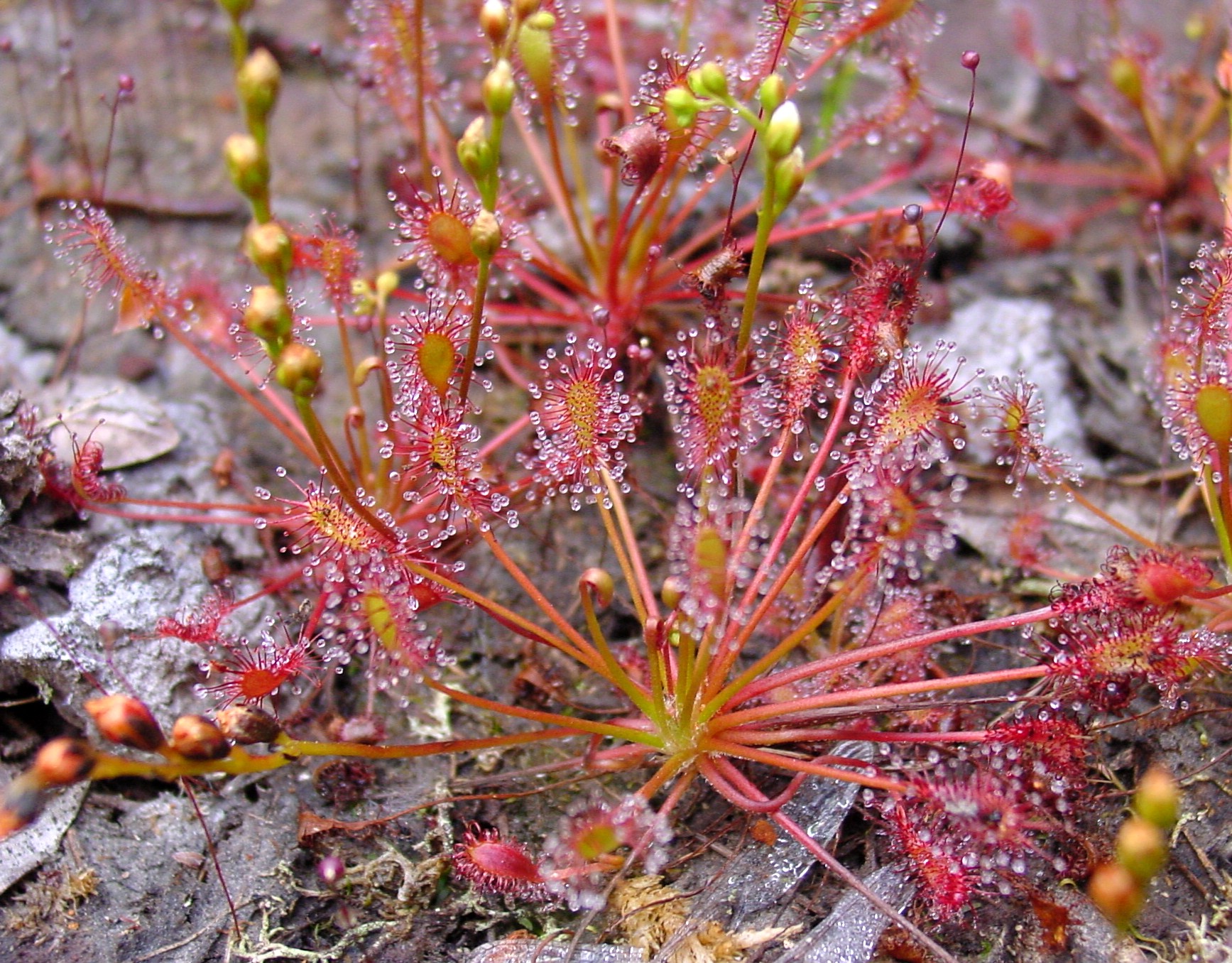
dwarf sundew
Drosera brevifolia
Photo: Photo: Wikimedia Commons, CC BY-SA
Overview
A detailed profile for this species is sourced from the IUCN Red List of Threatened Species as assessments become available.
Shortleaf sundew faces severe threats from habitat loss due to wetland drainage, agricultural conversion, and urban development across its range. The species' specialized carnivorous ecology and dependence on specific moisture and nutrient conditions make it particularly vulnerable to hydrological changes and habitat fragmentation.
Habitat
Shortleaf sundew occurs in wet sandy soils of bogs, seeps, ditches, and margins of ponds and streams, typically in open areas with consistent moisture. The species thrives in nutrient-poor, acidic wetland habitats where its carnivorous adaptations provide a competitive advantage.
Other threatened species in Droseraceae


Frequently asked questions
Why is dwarf sundew classified as Critically Endangered?
Where does dwarf sundew live?
What are the main threats to dwarf sundew?
Get weekly conservation intelligence
One short digest a week of the most striking species and country data we ship, plus breaking conservation news paired with our database where it matters.
Free, no spam. One-click unsubscribe in every email.