
Vermilion Darter
Etheostoma chermocki
Photo: Wikimedia Commons (CC) via https://en.wikipedia.org/wiki/Vermilion_darter
Overview
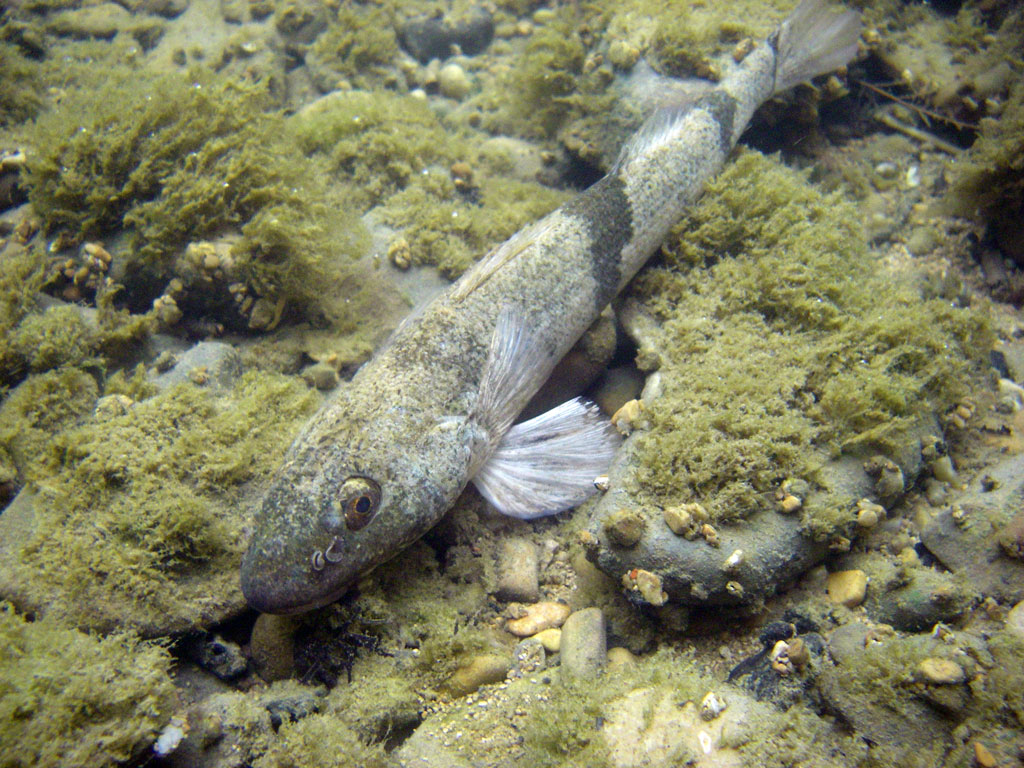
The vermilion darter is a species of freshwater ray-finned fish, a darter from the subfamily Etheostomatinae, part of the family Percidae, which also contains the perches, ruffes and pikeperches. It is endemic to the southern United States, where it only is found in Turkey Creek in Jefferson County, Alabama, part of the Mobile Bay drainage basin. It was first described by Herbert Boschung in 1992, who was the curator of ichthyology at the University of Alabama, along with biologist Richard Mayden and scientific illustrator Joseph Tomelleri.
On December 7, 2010, the US Fish and Wildlife Service designated 13 mi (21 km) of Turkey Creek watershed as critical habitat for the darter. According to the IUCN, the population of this fish is declining.
Etheostoma chermocki faces severe threats from habitat degradation and water quality decline in its limited range within the Tennessee River system. Agricultural runoff, urban development, and sedimentation have significantly altered the clear, rocky-bottomed streams this darter requires for survival. Dam construction and water diversions have further fragmented populations and altered natural flow regimes essential for breeding.
Habitat
This darter inhabits clear, fast-flowing streams with rocky or gravel substrates in the Tennessee River drainage system. It requires well-oxygenated waters with minimal siltation and stable flow patterns for feeding and reproduction.
Conservation measures underway
Other threatened species in PERCIDAE


Threatened in Türkiye

Frequently asked questions
Why is Vermilion Darter classified as Critically Endangered?
Where does Vermilion Darter live?
What are the main threats to Vermilion Darter?
Get weekly conservation intelligence
One short digest a week of the most striking species and country data we ship, plus breaking conservation news paired with our database where it matters.
Free, no spam. One-click unsubscribe in every email.