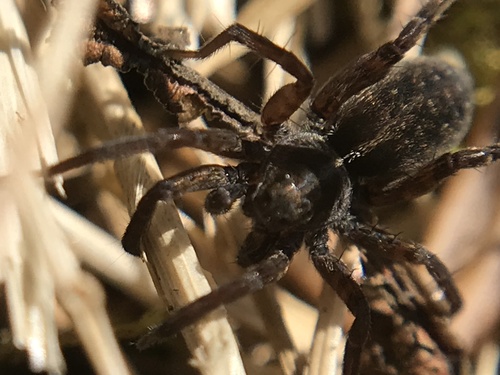
Pardosa sphagnicola
Photo: Photo: (c) Sam R, some rights reserved (CC BY-NC), uploaded by Sam R
Overview
Pardosa sphagnicola, commonly known as Tørvemosejæger or the bog wolf spider, is a critically endangered arachnid species with an extremely limited distribution. This small wolf spider is endemic to specific peat bog ecosystems in Denmark, where it has adapted to the unique conditions of sphagnum moss habitats. The species belongs to the Lycosidae family and exhibits the characteristic hunting behavior of wolf spiders, actively pursuing prey rather than building webs.
Its specialized habitat requirements make it particularly vulnerable to environmental changes. The primary threats to P. sphagnicola include habitat destruction through peat extraction, drainage of wetlands for agricultural or urban development, and climate change impacts on bog ecosystems.
The fragmentation of remaining suitable habitats further isolates populations and reduces genetic diversity. Additionally, changes in hydrology and vegetation composition within bog systems can alter the microhabitat conditions essential for the species' survival. Conservation efforts focus on protecting remaining peat bog habitats through designation of protected areas and restoration of degraded wetland systems.
Habitat management practices aim to maintain appropriate water levels and preserve the natural bog vegetation structure. Research initiatives work to better understand the species' ecology, population dynamics, and specific habitat requirements to inform targeted conservation strategies. The critically endangered status reflects the urgent need for immediate conservation action to prevent extinction of this specialized bog-dwelling spider.
The primary threats include habitat destruction from peat extraction and wetland drainage for development, which directly eliminates the specialized bog ecosystems this spider requires. Climate change and altered hydrology further degrade remaining habitats by changing water levels and vegetation composition in bog systems.
Habitat
Pardosa sphagnicola inhabits peat bog ecosystems characterized by sphagnum moss communities and specific hydrological conditions. The species requires the unique microhabitat conditions found in these acidic, nutrient-poor wetland environments.
Other threatened species in Lycosidae

Threatened in Åland Islands


Frequently asked questions
Why is Pardosa sphagnicola classified as Critically Endangered?
Where does Pardosa sphagnicola live?
What are the main threats to Pardosa sphagnicola?
Get weekly conservation intelligence
One short digest a week of the most striking species and country data we ship, plus breaking conservation news paired with our database where it matters.
Free, no spam. One-click unsubscribe in every email.