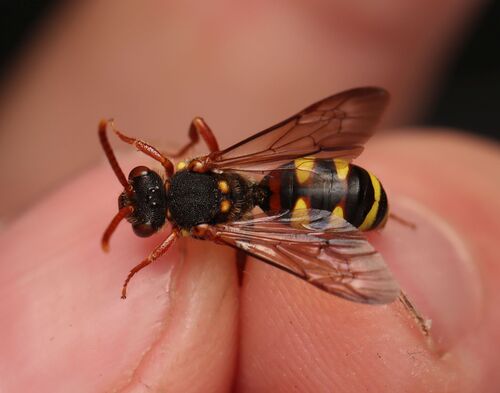
Tormentil Nomad Bee
Nomada roberjeotiana
Overview
A detailed profile for this species is sourced from the IUCN Red List of Threatened Species as assessments become available.
The Tormentil Nomad Bee faces severe population declines primarily due to the loss of its specialized host-parasite relationship with mining bees and the degradation of heathland habitats where tormentil plants flourish. Agricultural intensification and urban development have fragmented the mosaic of heath, grassland, and woodland edges essential for both the bee and its hosts. Climate change further threatens this species by altering the flowering periods of tormentil and disrupting the synchronized emergence patterns between the nomad bee and its host species.
Habitat
This specialized cuckoo bee inhabits heathlands, coastal dunes, and woodland clearings where tormentil (Potentilla erecta) grows abundantly and its host mining bees nest in sandy soils. The species requires a mosaic of flowering plants and suitable nesting sites for its hosts, typically found in semi-natural grasslands and heath margins.
Other threatened species in Apidae
Threatened in Åland Islands


Frequently asked questions
Why is Tormentil Nomad Bee classified as Vulnerable?
Where does Tormentil Nomad Bee live?
What are the main threats to Tormentil Nomad Bee?
Get weekly conservation intelligence
One short digest a week of the most striking species and country data we ship, plus breaking conservation news paired with our database where it matters.
Free, no spam. One-click unsubscribe in every email.