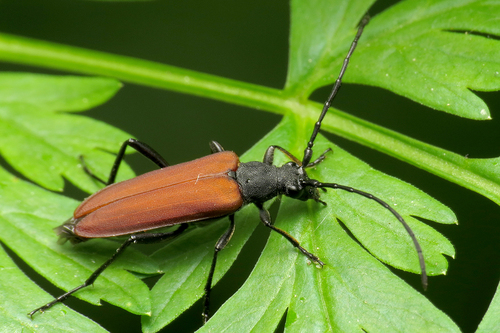
Nivellia sanguinosa
Photo: Photo: (c) Dmitry Gavryushin, some rights reserved (CC BY-NC), uploaded by Dmitry Gavryushin
Overview
The tegelröd blombock (Nivellia sanguinosa) is a critically endangered longhorn beetle species endemic to Scandinavia. This distinctive red-colored beetle belongs to the family Cerambycidae and is characterized by its relatively small size and specialized ecological requirements. The species inhabits old-growth deciduous forests, particularly those containing mature oak, birch, and other broadleaf trees where it depends on specific deadwood substrates for larval development.
Adult beetles are active during summer months and play a role in forest ecosystem processes through their wood-boring activities. The species has experienced severe population declines due to extensive habitat loss from intensive forestry practices, urbanization, and the removal of dead and dying trees from managed forests. Modern forest management techniques that prioritize timber production have significantly reduced the availability of suitable breeding substrates, fragmenting remaining populations.
Climate change may pose additional pressures through altered forest composition and increased frequency of extreme weather events. Conservation efforts focus on habitat restoration and the implementation of forest management practices that retain deadwood and maintain old-growth forest characteristics. Protected area designation and collaboration with forestry stakeholders are essential components of recovery strategies.
Research initiatives aim to better understand the species' specific habitat requirements and population dynamics to inform targeted conservation interventions. The critically endangered status reflects the urgent need for immediate action to prevent extinction of this specialized forest beetle.
The primary threat to tegelröd blombock is habitat loss from intensive forestry practices that remove deadwood and old-growth forest structures essential for breeding. Forest fragmentation and urbanization have further reduced available habitat and isolated remaining populations. Climate change may compound these pressures by altering forest ecosystems and increasing environmental stress.
Habitat
This species inhabits old-growth deciduous forests, particularly those with mature oak and birch trees. The beetles require specific deadwood substrates from dying or dead broadleaf trees for larval development and reproduction.
Other threatened species in Cerambycidae


Threatened in Austria
Frequently asked questions
Why is Nivellia sanguinosa classified as Critically Endangered?
Where does Nivellia sanguinosa live?
What are the main threats to Nivellia sanguinosa?
Get weekly conservation intelligence
One short digest a week of the most striking species and country data we ship, plus breaking conservation news paired with our database where it matters.
Free, no spam. One-click unsubscribe in every email.