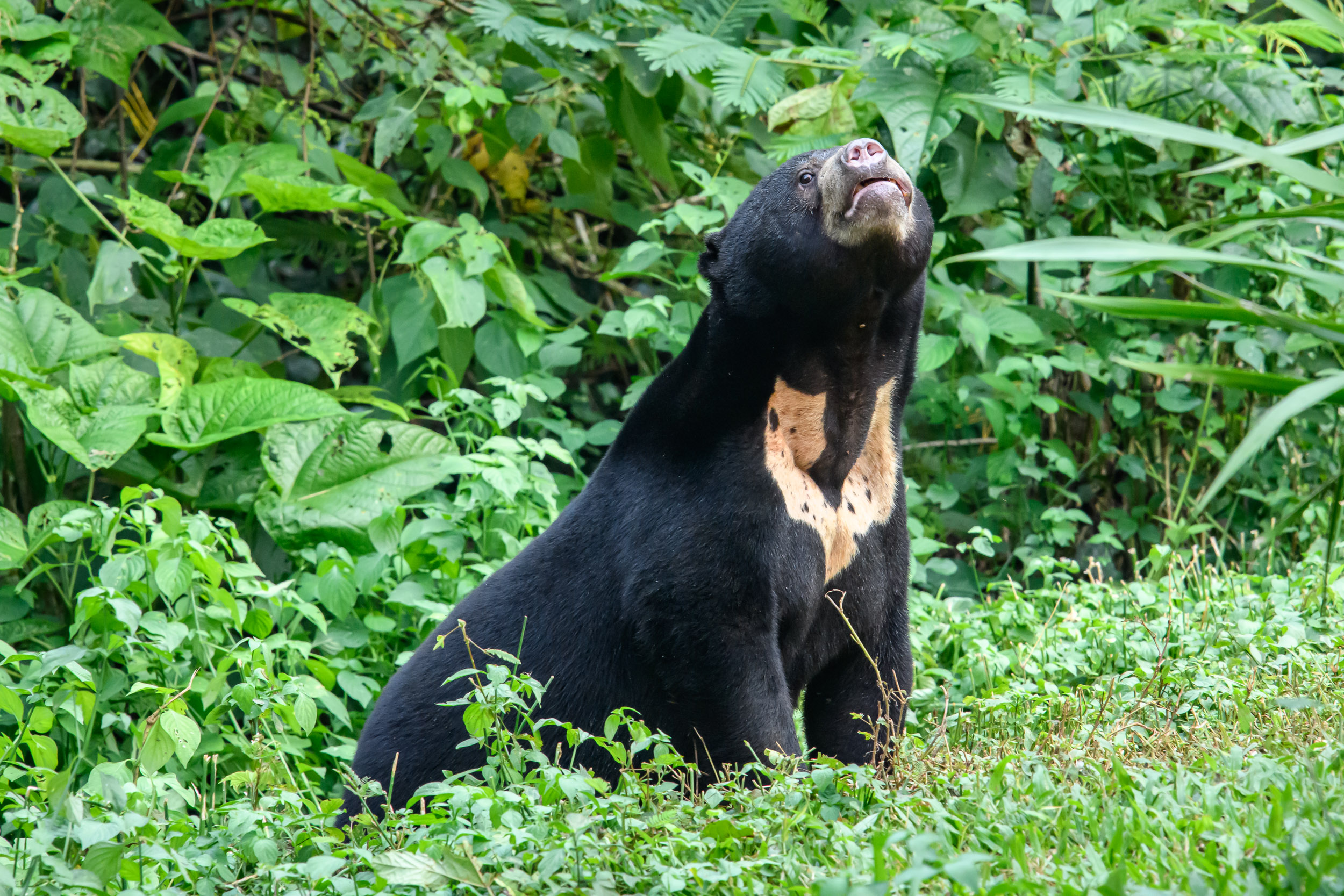
Sun Bear
Helarctos malayanus
Photo: Wikimedia Commons (CC) via https://en.wikipedia.org/wiki/Sun_bear
Overview
Helarctos malayanus (Sun Bear)
The sun bear is the world's smallest bear species, weighing 25-65 kg with distinctive orange-yellow chest patches and short black fur. These omnivorous mammals are excellent climbers, using their long claws and flexible limbs to navigate forest canopies while foraging for honey, insects, fruits, and small vertebrates. As seed dispersers and insect population regulators, sun bears play crucial ecological roles in maintaining forest biodiversity.
Sun bears inhabit tropical forests across Southeast Asia, from northeastern India through Myanmar, Thailand, Laos, Cambodia, Vietnam, Malaysia, and Indonesia. They occupy diverse forest types including lowland rainforests, montane forests, mangroves, and occasionally venture into wetland areas. Their range has contracted significantly from historical distributions.
The species faces severe population decline due to multiple pressures. Palm oil plantations and agricultural expansion fragment and destroy critical habitat. Logging operations eliminate den sites and food sources. Intensive poaching targets bears for bile, paws, and other body parts used in traditional medicine, while cubs are captured for the illegal pet trade. Climate-induced droughts affect food availability and forest ecosystems.
Conservation efforts include protected area establishment, anti-poaching patrols, and rehabilitation centers for rescued bears. Several countries have strengthened wildlife protection laws, while international organizations support habitat restoration and community-based conservation programs. Captive breeding programs operate in multiple facilities across the region.
Despite conservation initiatives, sun bear populations continue declining. Habitat loss accelerates across their range, and poaching pressure remains intense. Without significant strengthening of protection measures and habitat conservation, the species faces continued population reduction and potential local extinctions in fragmented landscapes.
The Malayan sun bear faces severe threats from the conversion of its forest habitat to agricultural plantations and livestock farms, combined with logging operations that destroy the trees they depend on for food and shelter. Bears are also directly killed by hunters and trappers, while ongoing droughts further stress their remaining habitat. All of these threats are currently ongoing and show no signs of decreasing.
Habitat
Conservation measures underway
Other threatened species in URSIDAE


Threatened in Bangladesh



Frequently asked questions
Why is Sun Bear classified as Vulnerable?
Where does Sun Bear live?
What are the main threats to Sun Bear?
Get weekly conservation intelligence
One short digest a week of the most striking species and country data we ship, plus breaking conservation news paired with our database where it matters.
Free, no spam. One-click unsubscribe in every email.