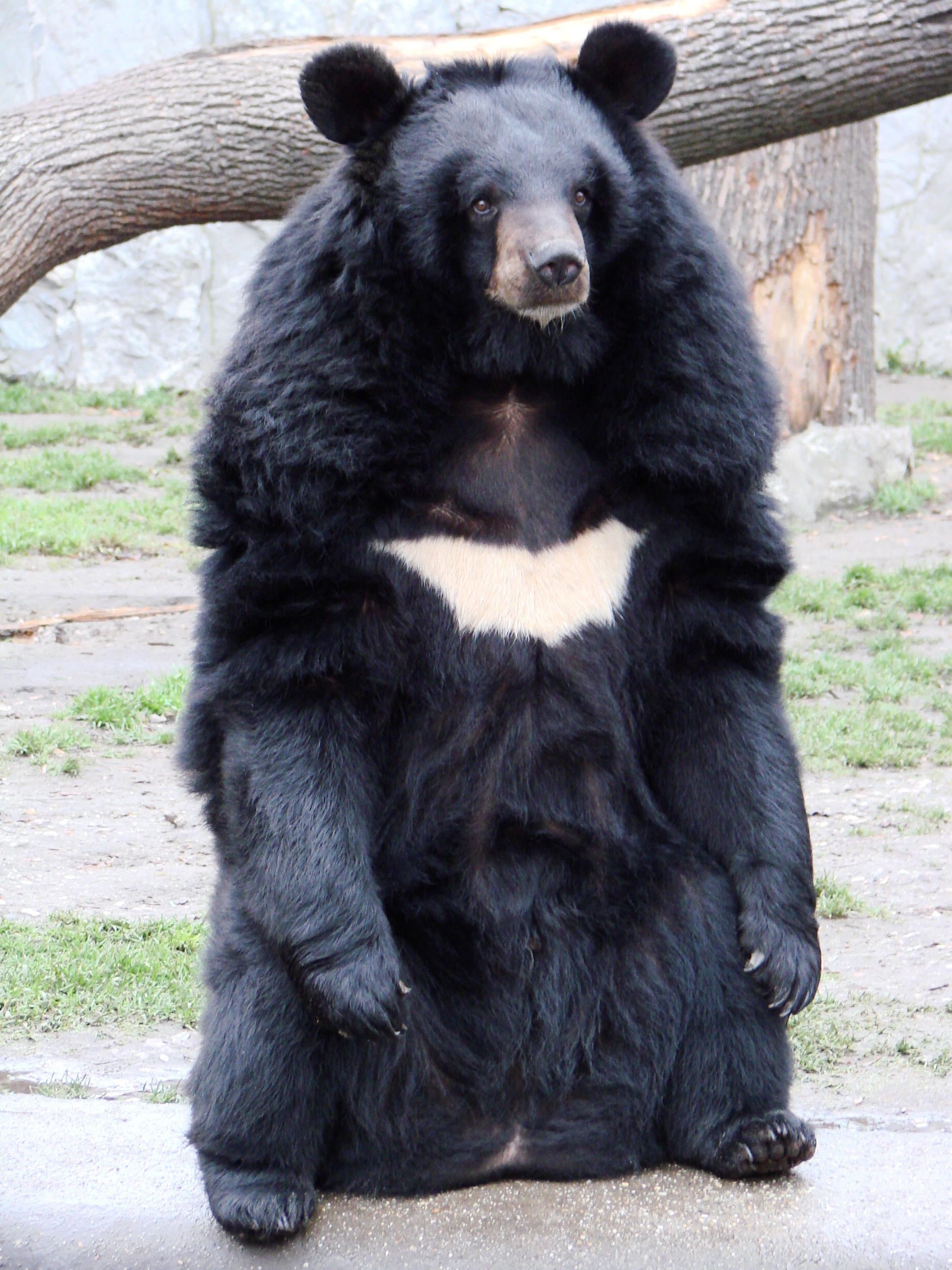
Asiatic Black Bear
Ursus thibetanus
Photo: Wikimedia Commons (CC) via https://en.wikipedia.org/wiki/Asian_black_bear
Overview
Asian Black Bear (Ursus thibetanus)
The Asian black bear, also known as the white-chested bear or moon bear, is a medium-sized bear species distinguished by its jet-black fur and characteristic V-shaped cream or white chest patch. Adults typically weigh 100-200 kg, with males considerably larger than females. These omnivorous bears are excellent climbers, often building day beds and feeding platforms in trees.
They play crucial ecological roles as seed dispersers and help maintain forest ecosystem balance through their varied diet of fruits, nuts, insects, and vegetation.
Asian black bears inhabit deciduous forests, grasslands, and mountainous regions across Asia, from the Himalayas through Southeast Asia to parts of Russia and Japan. They prefer forested areas with dense vegetation but adapt to various habitats including wetlands and rocky terrain, typically at elevations up to 4,300 meters.
The species faces severe pressure from habitat loss due to agricultural expansion, livestock farming, and logging operations. Dam construction fragments their territories, while hunting and trapping for traditional medicine—particularly bile farming—poses significant threats. Human-wildlife conflict increases as agricultural development encroaches on bear habitat, leading to retaliatory killings.
Conservation efforts include protected area establishment, anti-poaching patrols, and international trade regulations under CITES. Several countries have implemented bear rescue and rehabilitation programs, while community-based conservation initiatives work to reduce human-bear conflict through improved livestock protection and alternative livelihoods.
Despite conservation measures, populations continue declining across most of their range due to persistent habitat destruction and illegal hunting, indicating an uncertain future without intensified protection efforts.
Asian black bears face multiple ongoing threats from human activities that destroy their forest homes, including logging operations, dam construction that floods their habitat, and the conversion of wild areas into farmland and livestock ranches. Bears are also directly killed through hunting and trapping, both for traditional medicine and to prevent conflicts when they raid crops. All of these threats continue at present levels with no clear signs of decreasing.
Habitat
Conservation measures underway
Other threatened species in URSIDAE



Threatened in Afghanistan

Frequently asked questions
Why is Asiatic Black Bear classified as Vulnerable?
Where does Asiatic Black Bear live?
What are the main threats to Asiatic Black Bear?
Get weekly conservation intelligence
One short digest a week of the most striking species and country data we ship, plus breaking conservation news paired with our database where it matters.
Free, no spam. One-click unsubscribe in every email.