
European Sturgeon
Acipenser sturio
Photo: Wikimedia Commons (CC) via https://en.wikipedia.org/wiki/European_sea_sturgeon
Overview
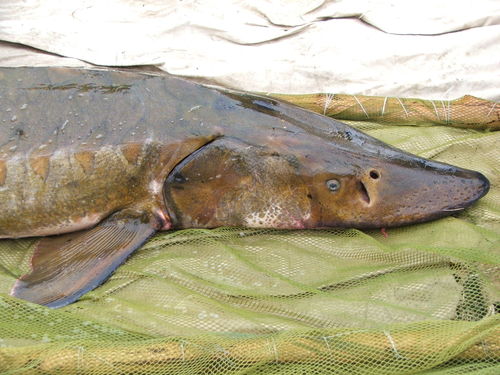
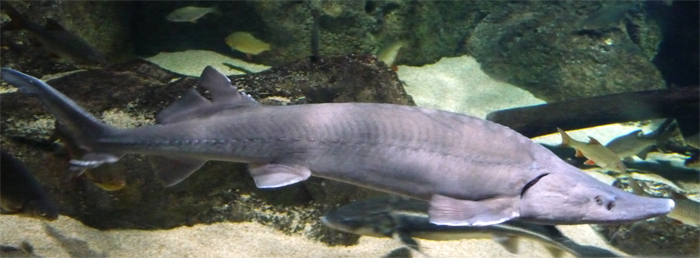
Acipenser sturio, commonly known as the Atlantic sturgeon or European sea sturgeon, is a large anadromous fish species that historically inhabited coastal waters and rivers throughout Europe and parts of North Africa. These ancient fish can reach lengths of up to 6 meters and weights exceeding 400 kilograms, making them among the largest fish species in European waters. Atlantic sturgeon are slow-growing and late-maturing, with individuals not reaching sexual maturity until 10-16 years of age.
They spend most of their adult lives in marine environments but return to freshwater rivers to spawn. The species has experienced catastrophic population declines across its historical range, with natural reproduction now confirmed in only a single river system in France, the Gironde-Garonne-Dordogne basin. Primary threats include overfishing for caviar and meat, habitat degradation through dam construction and river modification, pollution, and bycatch in marine fisheries.
The species' slow reproductive rate makes recovery particularly challenging. Conservation efforts include captive breeding programs, habitat restoration projects, fishing restrictions, and international cooperation through various European conservation initiatives. Restocking programs using captive-bred individuals have been implemented in several countries, though establishing self-sustaining wild populations remains extremely difficult.
The species is protected under multiple international agreements and national legislation across Europe.
The Atlantic sturgeon faces severe threats from historical overfishing for its valuable caviar and meat, which decimated populations across Europe. Habitat destruction through dam construction, river channelization, and pollution has eliminated or degraded critical spawning areas. The species' extremely slow reproductive rate makes recovery from these impacts particularly challenging.
Habitat
Atlantic sturgeon inhabit coastal marine waters and estuaries as adults, migrating into large river systems to spawn in freshwater areas with gravel or rocky substrates. Juveniles typically remain in freshwater for several years before migrating to marine environments.
Conservation measures underway
Other threatened species in ACIPENSERIDAE


Threatened in Åland Islands


Frequently asked questions
Why is European Sturgeon classified as Critically Endangered?
Where does European Sturgeon live?
What are the main threats to European Sturgeon?
Get weekly conservation intelligence
One short digest a week of the most striking species and country data we ship, plus breaking conservation news paired with our database where it matters.
Free, no spam. One-click unsubscribe in every email.