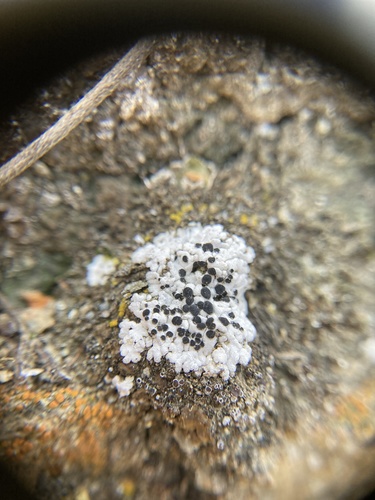
Starry Breck Lichen
Buellia asterella
Photo: (c) Annie Evankow, einige Rechte vorbehalten (CC BY), hochgeladen von Annie Evankow
Overview
Buellia asterella, commonly referred to as the starry breck lichen, is a rare, black and white lichen in the family Caliciaceae. Once found all across the central European grasslands, it was described as new to science in 1974. Today, it is classified by the IUCN Red List as Critically Endangered and only found in select regions in Norway and Germany.
Buellia asterella faces severe threats from air pollution and acid rain, which directly damage its thallus and disrupt the delicate chemical balance required for photosynthesis. Urban development and industrial activities have eliminated much of its suitable substrate, while climate change alters the specific humidity and temperature conditions this lichen requires for survival.
Habitat
This crustose lichen grows on calcareous rocks and concrete surfaces in urban and semi-urban environments. It requires specific pH conditions and moderate air quality, typically found on walls, monuments, and limestone outcrops in areas with reduced industrial pollution.
Other threatened species in CALICIACEAE
Threatened in India


Frequently asked questions
Why is Starry Breck Lichen classified as Critically Endangered?
Where does Starry Breck Lichen live?
What are the main threats to Starry Breck Lichen?
Get weekly conservation intelligence
One short digest a week of the most striking species and country data we ship, plus breaking conservation news paired with our database where it matters.
Free, no spam. One-click unsubscribe in every email.