Spinner Shark
Carcharhinus brevipinna
Overview
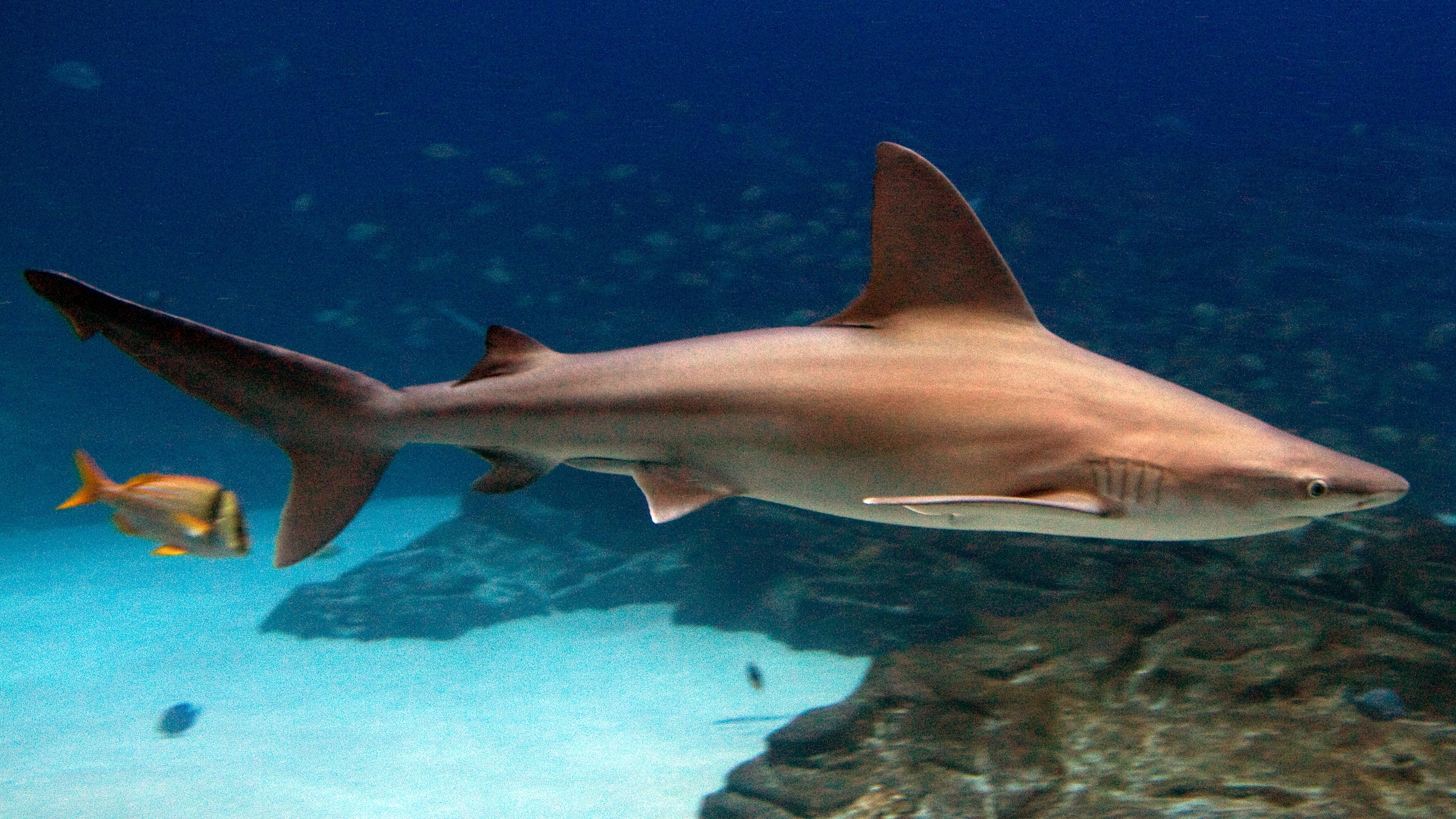
Carcharhinus brevipinna is a slender, fast-swimming requiem shark named for its distinctive spinning leaps out of the water, performed while lunging vertically through schools of prey. It reaches lengths of around 2 to 3 meters and is identified by its long snout, black-tipped fins, and a black marking on its second dorsal fin. It feeds primarily on small schooling fish such as sardines, herring, and anchovies, as well as squid and cuttlefish, making it an important mid-to-upper trophic level predator that helps regulate populations of forage fish in coastal ecosystems.
The species inhabits warm temperate and tropical waters worldwide, favoring coastal and shelf environments, including surf zones, bays, and estuarine areas, as well as offshore oceanic waters. It has a broad distribution spanning the Atlantic, Indian, and Pacific Oceans, with confirmed populations across North America, South America, Africa, the Middle East, Asia, and Oceania.
The primary threat to this species is fishing, both targeted and incidental. It is caught in commercial and artisanal fisheries for its meat and fins, and frequently taken as bycatch in gillnet and longline operations targeting other species. Its coastal habitat preference increases exposure to intensive fishing pressure throughout much of its range.
Conservation measures include regional fisheries management regulations, catch limits, and finning bans in some jurisdictions, along with its listing under international agreements that regulate trade in shark products. However, enforcement and monitoring remain inconsistent across the many countries where it occurs.
Given ongoing fishing pressure across its range and a documented decreasing population trend, the species' conservation outlook remains concerning, with continued declines likely absent stronger, more consistently enforced management measures.
The main threat to Spinner Sharks is fishing, as they are caught both intentionally and accidentally in commercial and recreational fisheries around the world. This ongoing pressure from nets and fishing lines is the primary concern for the species. This threat is currently ongoing and continues without signs of slowing down.
Habitat
Other threatened species in CARCHARHINIDAE

Threatened in Angola



Frequently asked questions
Why is Spinner Shark classified as Vulnerable?
Where does Spinner Shark live?
What are the main threats to Spinner Shark?
Get weekly conservation intelligence
One short digest a week of the most striking species and country data we ship, plus breaking conservation news paired with our database where it matters.
Free, no spam. One-click unsubscribe in every email.