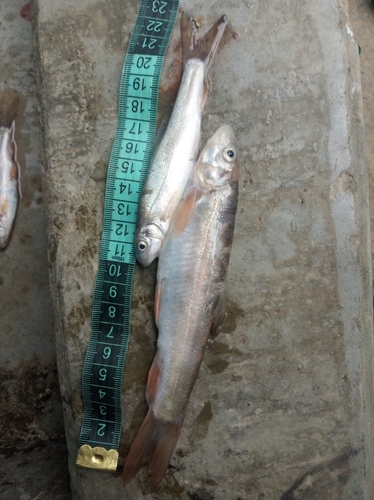
Schizothorax nepalensis
Photo: (c) Basu Dev Poudel, some rights reserved (CC BY-NC), uploaded by Basu Dev Poudel
Overview
Schizothorax nepalensis is a freshwater fish species endemic to the high-altitude river systems of Nepal and surrounding Himalayan regions. This cyprinid fish belongs to the snow trout genus and is adapted to cold, fast-flowing mountain streams and rivers at elevations typically above 1,000 meters. The species exhibits typical characteristics of high-altitude fish, including specialized physiological adaptations to low oxygen levels and cold water temperatures.
Schizothorax nepalensis faces severe population declines that have led to its classification as Critically Endangered by the IUCN. Primary threats include habitat degradation from hydroelectric development, which fragments river systems and alters natural flow patterns essential for the species' lifecycle. Water pollution from agricultural runoff, domestic waste, and industrial activities further compromises water quality in its native watersheds.
Climate change poses additional challenges by altering precipitation patterns and increasing water temperatures in high-altitude environments. Overfishing and the use of destructive fishing methods have also contributed to population declines. The species' limited geographic range makes it particularly vulnerable to localized threats.
Conservation efforts remain limited, though some initiatives focus on habitat protection and sustainable fishing practices in key watersheds. Research on the species' ecology and population status is ongoing but hampered by the remote and challenging terrain of its habitat. Effective conservation will require coordinated efforts addressing multiple threat factors and involving local communities in protection measures.
Schizothorax nepalensis faces severe threats from hydroelectric development that fragments its river habitat and alters essential water flow patterns. Water pollution from agricultural and domestic sources, combined with overfishing and destructive fishing practices, has further contributed to dramatic population declines.
Habitat
This species inhabits cold, fast-flowing mountain streams and rivers in the Himalayan region, typically at elevations above 1,000 meters. It requires clean, well-oxygenated water with rocky substrates and natural flow regimes characteristic of high-altitude aquatic ecosystems.
Conservation measures underway
Other threatened species in CYPRINIDAE
Threatened in Nepal


Frequently asked questions
Why is Schizothorax nepalensis classified as Critically Endangered?
Where does Schizothorax nepalensis live?
What are the main threats to Schizothorax nepalensis?
Get weekly conservation intelligence
One short digest a week of the most striking species and country data we ship, plus breaking conservation news paired with our database where it matters.
Free, no spam. One-click unsubscribe in every email.