
Bentfin Devil Ray
Mobula thurstoni
Photo: Wikimedia Commons (CC) via https://en.wikipedia.org/wiki/Bentfin_devil_ray
Overview
Species Overview
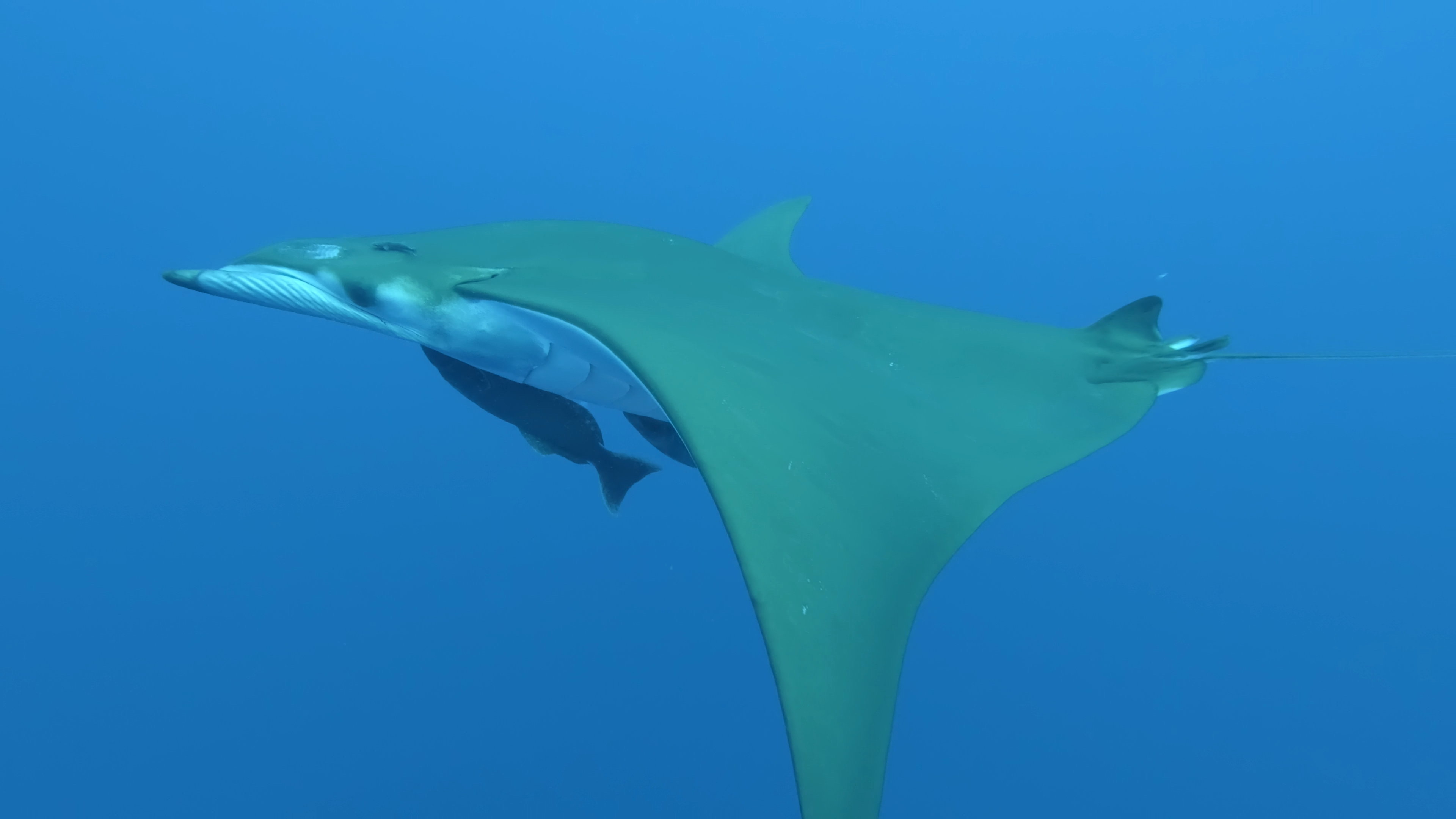
The bentfin devil ray, also known as the smoothtail mobula, is a medium-sized ray recognized by its distinctive bent-tipped pectoral fins, which give the species its common name. Like other mobulids, it is a filter feeder, using specialized gill plates to strain zooplankton from the water column. It is typically found alone or in small groups, though larger aggregations occur seasonally in productive feeding areas.
As a mid-trophic-level filter feeder, it plays a role in transferring energy from plankton to larger predators, while its slow reproductive cycle—producing very few offspring over long intervals—makes it inherently vulnerable to population decline.
Range and Habitat
This species occupies tropical and subtropical waters across the globe, inhabiting both marine neritic (coastal) and oceanic zones. It has been recorded in at least 35 countries, spanning the eastern Pacific (Mexico to Peru), West Africa (Senegal to Angola), the Indo-Pacific (Indonesia, Philippines, Australia), and parts of the Mediterranean and Red Sea.
Threats
The species faces significant pressure from targeted fisheries seeking its gill plates, used in traditional medicine markets, as well as substantial bycatch mortality in gillnet and purse seine fisheries. Coastal habitat degradation, pollution, and habitat alteration further compound these pressures. Its slow reproductive rate severely limits the species' capacity to recover from population losses.
Conservation and Outlook
Some range states have introduced fishing and trade restrictions, and the species is listed under CITES Appendix II and CMS, supporting international trade regulation and cooperative management. Despite these measures, the population continues to decline, and the species is currently classified as Critically Endangered, with its long-term trajectory remaining negative absent stronger enforcement of bycatch mitigation and fisheries controls.
The Bentfin Devil Ray is mainly threatened by fishing: it's caught on purpose for its gill plates (used in some traditional medicine markets) and is also accidentally trapped in large fishing nets, like gillnets and purse seine nets, meant for other species. It also faces problems from its ocean habitat being altered and polluted, and because it reproduces very slowly, its populations struggle to bounce back once numbers drop. All of these threats are currently ongoing and show no signs of easing up.
Habitat
Mobula thurstoni inhabits tropical and subtropical waters of the Indo-Pacific, typically found in pelagic environments from surface waters to depths of approximately 200 meters. The species occurs in both oceanic and nearshore waters, often aggregating in areas with high productivity where zooplankton concentrations support their filter-feeding behavior.
Conservation measures underway
Other threatened species in MOBULIDAE

Threatened in Angola



Frequently asked questions
Why is Bentfin Devil Ray classified as Critically Endangered?
Where does Bentfin Devil Ray live?
What are the main threats to Bentfin Devil Ray?
Get weekly conservation intelligence
One short digest a week of the most striking species and country data we ship, plus breaking conservation news paired with our database where it matters.
Free, no spam. One-click unsubscribe in every email.