
Sharpnose Guitarfish
Glaucostegus granulatus
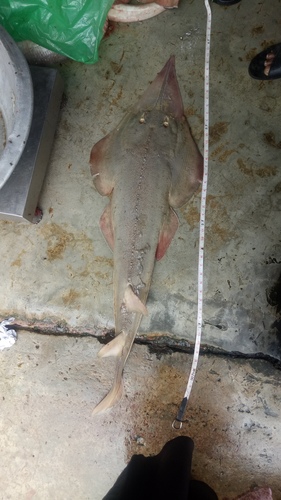
Photo: Wikimedia Commons (CC) via https://en.wikipedia.org/wiki/Sharpnose_guitarfish
Overview
Glaucostegus granulatus, commonly known as the granulated guitarfish or sharpnose guitarfish, is a critically endangered ray species belonging to the family Glaucostegidae. This distinctive elasmobranch exhibits the characteristic flattened body shape of guitarfish, with an elongated snout and shark-like tail. The species is distinguished by its granulated skin texture and robust build.
Glaucostegus granulatus inhabits coastal waters of the western Indian Ocean, with documented populations in the Red Sea, Persian Gulf, and along the coasts of East Africa and the Arabian Peninsula. The species typically occurs in shallow marine environments, favoring sandy and muddy substrates in depths ranging from nearshore areas to moderate depths on the continental shelf. Like other guitarfish species, it feeds primarily on benthic invertebrates and small fish.
The species faces severe population declines due to intensive fishing pressure throughout its range. Guitarfish are particularly vulnerable to capture in bottom trawl fisheries and artisanal fishing operations due to their benthic lifestyle and coastal habitat preferences. The meat is valued for human consumption, and like other elasmobranchs, the species has low reproductive rates that limit population recovery.
Conservation efforts remain limited, with the species receiving protection under CITES Appendix II listings for guitarfish. However, enforcement of fishing regulations and habitat protection measures are inadequate across much of its range, contributing to continued population declines.
Glaucostegus granulatus faces severe threats from intensive fishing pressure, particularly from bottom trawl fisheries and artisanal fishing operations that target the species for its meat. The species' coastal habitat preferences and benthic lifestyle make it highly susceptible to capture, while its low reproductive rate severely limits population recovery potential.
Habitat
This species inhabits shallow coastal waters of the western Indian Ocean, including the Red Sea and Persian Gulf regions. It prefers sandy and muddy bottom substrates on the continental shelf, typically occurring from nearshore areas to moderate depths.
Conservation measures underway
Other threatened species in GLAUCOSTEGIDAE


Threatened in Bahrain



Frequently asked questions
Why is Sharpnose Guitarfish classified as Critically Endangered?
Where does Sharpnose Guitarfish live?
What are the main threats to Sharpnose Guitarfish?
Get weekly conservation intelligence
One short digest a week of the most striking species and country data we ship, plus breaking conservation news paired with our database where it matters.
Free, no spam. One-click unsubscribe in every email.