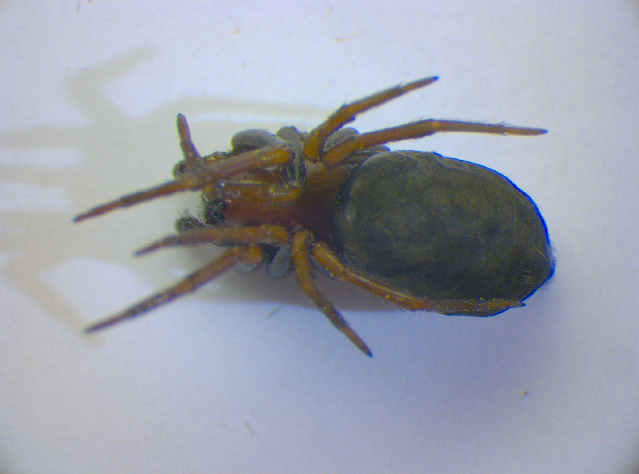
Titanoeca quadriguttata
Photo: Wikimedia Commons (CC) via https://en.wikipedia.org/wiki/Titanoeca_quadriguttata
Overview
The rotskaardespin (Titanoeca quadriguttata) is a small ground-dwelling spider species belonging to the family Titanoecidae. This arachnid is characterized by its distinctive four-spot pattern, from which its scientific name derives. The species inhabits rocky environments and stone walls, typically found in crevices and under stones where it constructs silk-lined retreats.
Titanoeca quadriguttata has a limited distribution range, primarily documented in parts of Europe where suitable rocky habitats exist. The spider is a nocturnal hunter that feeds on small arthropods and insects found within its rocky microhabitat. Currently classified as Critically Endangered by the IUCN, this species faces significant conservation challenges due to its restricted range and specialized habitat requirements.
The primary threats include habitat destruction through quarrying activities, urban development, and changes in land use that affect rocky outcrop environments. Climate change may also impact the species through alterations to its preferred microclimate conditions within rock crevices. The spider's small population size and limited dispersal ability make it particularly vulnerable to local extinctions.
Conservation efforts for this species are limited, partly due to insufficient knowledge about its population dynamics and ecological requirements. Research initiatives focusing on population surveys, habitat mapping, and ecological studies are needed to develop effective conservation strategies. Protection of known rocky habitat sites and careful management of quarrying activities in areas where the species occurs are essential for its long-term survival.
The rotskaardespin faces primary threats from habitat destruction caused by quarrying operations and urban development that eliminate rocky outcrop environments. Climate change poses additional risks by altering the microclimate conditions within rock crevices that the species depends upon for survival.
Habitat
This species inhabits rocky environments including stone walls, rock crevices, and areas under stones where it constructs silk-lined retreats. It requires stable rocky microhabitats with suitable moisture and temperature conditions for shelter and hunting.
Other threatened species in Titanoecidae

Threatened in Austria
Frequently asked questions
Why is Titanoeca quadriguttata classified as Critically Endangered?
Where does Titanoeca quadriguttata live?
What are the main threats to Titanoeca quadriguttata?
Get weekly conservation intelligence
One short digest a week of the most striking species and country data we ship, plus breaking conservation news paired with our database where it matters.
Free, no spam. One-click unsubscribe in every email.