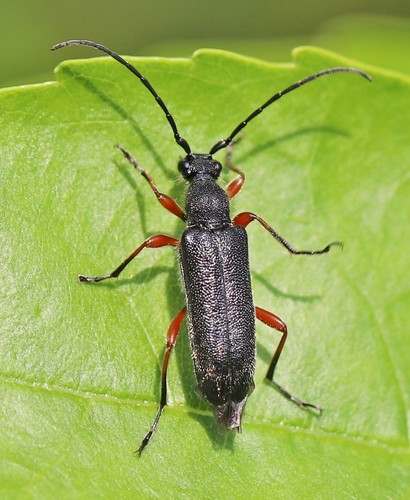
Anoplodera rufipes
Local name: rödbent blombock
Photo: Photo: (c) Ryzhkov Oleg, some rights reserved (CC BY-NC), uploaded by Ryzhkov Oleg
Overview
A detailed profile for this species is sourced from the IUCN Red List of Threatened Species as assessments become available.
The rödbent blombock faces severe population declines due to habitat loss from intensive forestry practices and urbanization across its range. Climate change is altering the composition of host tree species and disrupting the timing of adult emergence with flower availability, while pollution and pesticide use in managed forests further threaten remaining populations.
Habitat
Deciduous and mixed woodlands, forest edges, and parks where adults feed on flowers of various plants while larvae develop in dead or dying hardwood trees, particularly oak, birch, and other broadleaf species. Requires a mosaic of mature trees for breeding and diverse flowering plants for adult nutrition.
Other threatened species in Cerambycidae


Threatened in Austria

Frequently asked questions
Why is rödbent blombock classified as Critically Endangered?
Where does rödbent blombock live?
What are the main threats to rödbent blombock?
Get weekly conservation intelligence
One short digest a week of the most striking species and country data we ship, plus breaking conservation news paired with our database where it matters.
Free, no spam. One-click unsubscribe in every email.