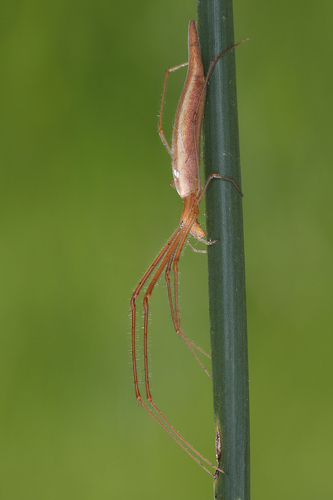
Tetragnatha striata
Overview
A detailed profile for this species is sourced from the IUCN Red List of Threatened Species as assessments become available.
The rietstrekspin faces severe habitat degradation due to wetland drainage and agricultural intensification across its limited European range. Water pollution from agricultural runoff and urban development has compromised the quality of remaining reed bed habitats essential for this specialized orb weaver. Climate change-induced alterations to wetland hydrology further threaten the delicate moisture conditions required for successful reproduction and prey availability.
Habitat
This specialized orb weaver spider inhabits reed beds and wetland margins, constructing its webs among tall grasses and emergent vegetation in freshwater marshes. The species requires stable water levels and dense vegetation structure typical of undisturbed wetland ecosystems.
Other threatened species in Tetragnathidae
Threatened in Åland Islands


Frequently asked questions
Why is Tetragnatha striata classified as Endangered?
Where does Tetragnatha striata live?
What are the main threats to Tetragnatha striata?
Get weekly conservation intelligence
One short digest a week of the most striking species and country data we ship, plus breaking conservation news paired with our database where it matters.
Free, no spam. One-click unsubscribe in every email.