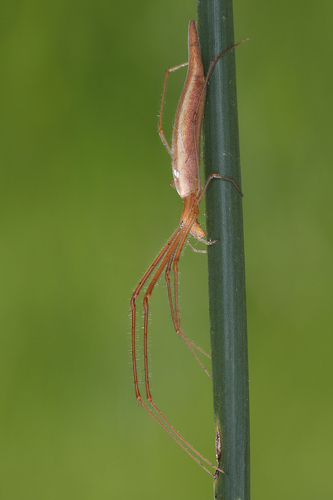
Tetragnatha reimoseri
Photo: Photo: (c) gernotkunz, all rights reserved, uploaded by gernotkunz
Overview
The staartstrekspin (Tetragnatha reimoseri) is a critically endangered orb weaver spider endemic to the Netherlands. This small arachnid belongs to the long-jawed orb weaver family Tetragnathidae, characterized by their elongated bodies and distinctive web-building behavior. The species was historically found in wetland environments, particularly in reed beds and marshy areas along waterways.
Like other Tetragnatha species, it constructs semi-permanent webs to capture flying insects, playing a role in local ecosystem pest control. The staartstrekspin faces severe population pressures due to habitat loss and degradation of Dutch wetland systems. Urban development, agricultural intensification, and water management practices have significantly reduced suitable habitat areas.
Climate change may further impact the species through altered precipitation patterns and temperature regimes that affect both the spider and its prey species. The fragmentation of remaining wetland patches limits population connectivity and genetic exchange. Conservation efforts for this species remain limited, partly due to insufficient population data and the challenges of monitoring small arachnid populations.
Protection of existing wetland habitats and restoration of degraded marsh systems represent the primary conservation approaches. The species' critically endangered status reflects the broader decline of specialized wetland fauna in the Netherlands, highlighting the urgent need for comprehensive habitat protection and restoration programs.
The staartstrekspin faces severe threats from wetland habitat loss due to urban development and agricultural expansion in the Netherlands. Water management practices and drainage of marshy areas have eliminated much of the species' suitable habitat. Climate change may further impact remaining populations through altered environmental conditions.
Habitat
This species inhabits wetland environments, particularly reed beds and marshy areas along waterways in the Netherlands. It requires stable aquatic vegetation where it can construct webs to capture flying insects.
Other threatened species in Tetragnathidae
Threatened in Belgium

Frequently asked questions
Why is Tetragnatha reimoseri classified as Critically Endangered?
Where does Tetragnatha reimoseri live?
What are the main threats to Tetragnatha reimoseri?
Get weekly conservation intelligence
One short digest a week of the most striking species and country data we ship, plus breaking conservation news paired with our database where it matters.
Free, no spam. One-click unsubscribe in every email.