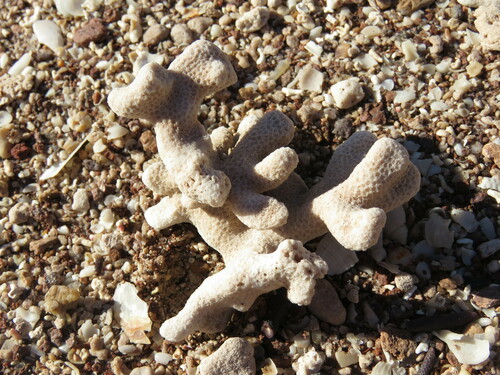
Saffron Coral
Porites sverdrupi
Photo: Photo: (c) Emmanuel Guevara Lazcano, some rights reserved (CC BY-NC-SA), uploaded by Emmanuel Guevara Lazcano
Overview
Porites sverdrupi, sometimes called the Saffron Coral, is a stony coral species endemic to the shallow, sheltered waters of the Gulf of California, Mexico. It forms low, encrusting to massive colonies in warm, subtropical lagoons and rocky reef margins, often in areas with limited water circulation. As a reef-building species, it contributes to the structural complexity of the localized coral communities it inhabits, providing microhabitat for invertebrates and juvenile fish.
The species is currently classified as Critically Endangered (CR) by the IUCN, with a population trend that is decreasing. Its restricted range makes it especially vulnerable: the Gulf of California experiences pronounced sea temperature fluctuations, and repeated marine heatwaves have triggered bleaching events that stress or kill colonies outright. Because Porites sverdrupi occurs in a small number of known localities, localized disturbances—such as coastal development, sedimentation from nearshore construction, and shifts in water quality—can disproportionately affect a large share of the total population.
Ocean acidification further compounds these pressures by reducing the coral's capacity to build and maintain its calcium carbonate skeleton. Conservation attention for this species has grown alongside broader efforts to document and protect Gulf of California marine biodiversity, including marine protected areas that overlap with parts of its range and regional reef-monitoring programs tracking bleaching and recovery patterns. On a more encouraging note, some surveyed colonies have shown resilience following past thermal stress events, suggesting a degree of adaptive capacity that researchers hope can be supported through continued habitat protection and reduced local stressors.
Sustained monitoring, combined with efforts to limit coastal pollution and physical damage to reef substrate, offers a realistic pathway to stabilizing remaining populations even as global ocean conditions continue to shift.
Porites sverdrupi faces severe threats from ocean warming and acidification, which cause coral bleaching and reduce the species' ability to build its calcium carbonate skeleton. The species is particularly vulnerable to marine heatwaves that have become increasingly frequent in the Eastern Pacific. Coastal development and pollution from terrestrial runoff further degrade the limited reef habitats where this coral occurs.
Habitat
Porites sverdrupi inhabits shallow coral reef environments in the Eastern Pacific, typically found in areas with moderate to strong water circulation. This species forms part of the reef framework in tropical marine waters where it contributes to the structural complexity of coral communities.
Conservation measures underway
Other threatened species in PORITIDAE
Threatened in Mexico
Frequently asked questions
Why is Saffron Coral classified as Critically Endangered?
Where does Saffron Coral live?
What are the main threats to Saffron Coral?
Get weekly conservation intelligence
One short digest a week of the most striking species and country data we ship, plus breaking conservation news paired with our database where it matters.
Free, no spam. One-click unsubscribe in every email.