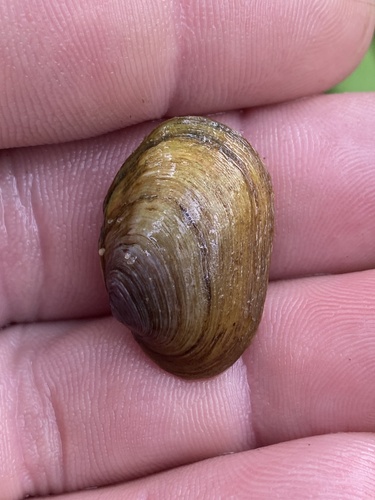
pale lilliput
Toxolasma cylindrellum
Photo: (c) Jesse Holifield, some rights reserved (CC BY-NC), uploaded by Jesse Holifield
Overview
The Pale Lilliput Pearly Mussel (Toxolasma cylindrellum) is a small freshwater bivalve mollusk endemic to the southeastern United States. This critically endangered species historically inhabited rivers and streams across portions of Alabama, Georgia, and Tennessee, though its current distribution is severely restricted. Like other freshwater mussels, the Pale Lilliput has a complex life cycle that requires fish hosts for larval development, making it particularly vulnerable to ecosystem disruptions.
The species typically inhabits shallow areas of rivers with stable gravel and sand substrates where water flow provides adequate oxygen and food particles. Its small size, reaching only about 40 millimeters in length, and pale yellowish shell distinguish it from related species. The Pale Lilliput faces multiple threats that have contributed to its critical conservation status, including habitat degradation from dam construction, water pollution from agricultural and urban runoff, and sedimentation that can smother individuals and alter substrate composition.
Climate change may further stress remaining populations through altered flow regimes and temperature changes. The species' dependence on specific fish hosts for reproduction adds another layer of vulnerability, as declines in host fish populations directly impact mussel recruitment. Conservation efforts focus on habitat protection and restoration, water quality improvement, and research to better understand the species' ecological requirements.
Captive breeding programs and population monitoring are also being implemented to prevent extinction and support recovery efforts where viable populations remain.
The Pale Lilliput Pearly Mussel faces habitat destruction from dam construction and water diversions that alter natural flow patterns. Water pollution from agricultural runoff, urban development, and industrial activities degrades water quality and reduces food availability. Sedimentation from land use changes can bury individuals and destroy the stable substrate required for survival.
Habitat
This species inhabits shallow areas of rivers and streams with stable gravel and sand substrates. It requires clean, well-oxygenated water with moderate flow rates that provide adequate food particles and support its complex reproductive cycle involving fish hosts.
Other threatened species in Unionidae
Threatened in United States
Frequently asked questions
Why is pale lilliput classified as Critically Endangered?
Where does pale lilliput live?
What are the main threats to pale lilliput?
Get weekly conservation intelligence
One short digest a week of the most striking species and country data we ship, plus breaking conservation news paired with our database where it matters.
Free, no spam. One-click unsubscribe in every email.