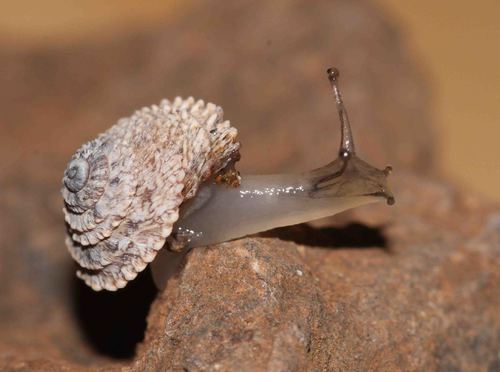
Obelus despreauxii
Photo: (c) Frank Walther, all rights reserved, uploaded by Frank Walther
Overview
Obelus despreauxii is a European species of small air-breathing land snail, a terrestrial pulmonate gastropod mollusc in the family Geomitridae.
Obelus despreauxii faces severe threats from habitat destruction due to urban development and agricultural expansion across its limited range in the Canary Islands. The species is particularly vulnerable to introduced predators and competitors that have disrupted the delicate island ecosystem. Climate change poses an additional threat through altered precipitation patterns that affect the specific microhabitats this endemic species requires for survival.
Habitat
This endemic species inhabits the unique laurel forest ecosystems and rocky coastal areas of the Canary Islands. It requires specific microclimatic conditions found in sheltered ravines and north-facing slopes with high humidity and stable temperatures.
Conservation measures underway
Other threatened species in GEOMITRIDAE
Threatened in Spain
Frequently asked questions
Why is Obelus despreauxii classified as Critically Endangered?
Where does Obelus despreauxii live?
What are the main threats to Obelus despreauxii?
Get weekly conservation intelligence
One short digest a week of the most striking species and country data we ship, plus breaking conservation news paired with our database where it matters.
Free, no spam. One-click unsubscribe in every email.