Caseolus galeatus
Overview
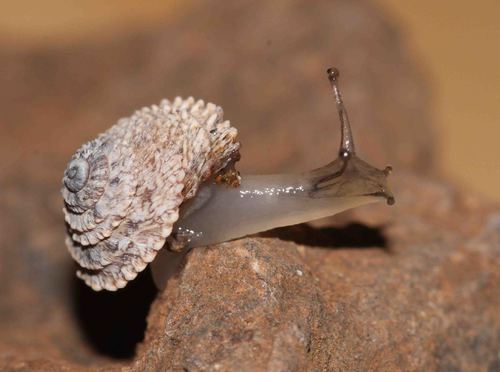
Caseolus galeatus is a land snail endemic to the island of Madeira, a Portuguese archipelago in the North Atlantic renowned for its high concentration of endemic invertebrates. Like other members of its genus, it possesses a coiled, helmet-shaped shell adapted to the humid, sheltered microhabitats of Madeira's laurel forest zone, where it lives among leaf litter, damp rock crevices, and calcareous substrates. This species is classified as Critically Endangered (CR) on the IUCN Red List, reflecting an extremely restricted geographic range that leaves it acutely vulnerable to any further habitat disturbance.
Its survival is threatened primarily by the ongoing loss and fragmentation of native laurisilva forest, driven by agricultural expansion, urban development, and the spread of invasive plant species that alter soil moisture and leaf-litter composition essential to the snail's life cycle. Predation and competition from introduced non-native snails and other invasive fauna further compound pressures on remaining populations, which are confined to small, isolated pockets of suitable habitat. Population trend data are currently unknown, underscoring the need for dedicated field surveys to establish baseline numbers and monitor change over time.
On a positive note, Madeira's laurel forest has gained increasing recognition as a UNESCO World Heritage Site and biodiversity hotspot, prompting expanded conservation attention toward the island's endemic land snail fauna, including habitat protection measures and invasive species control programs within protected forest reserves. Continued investment in these efforts, alongside targeted taxonomic and ecological research, offers a meaningful pathway toward stabilizing this species' fragile foothold on the island.
Caseolus galeatus faces severe threats from habitat destruction due to urban development and agricultural expansion across its limited range in the Canary Islands. The species is particularly vulnerable to introduced predatory species and invasive plants that alter its native habitat structure. Climate change poses an additional threat through altered precipitation patterns that affect the humid microhabitats essential for this terrestrial gastropod's survival.
Habitat
This endemic land snail inhabits humid laurel forests and coastal scrublands in the Canary Islands, particularly favoring areas with dense vegetation cover and stable moisture levels. The species requires specific microhabitat conditions including leaf litter, rotting wood, and rocky crevices that provide shelter and maintain the humidity essential for its survival.
Conservation measures underway
Other threatened species in GEOMITRIDAE
Threatened in Portugal
Frequently asked questions
Why is Caseolus galeatus classified as Critically Endangered?
Where does Caseolus galeatus live?
What are the main threats to Caseolus galeatus?
Get weekly conservation intelligence
One short digest a week of the most striking species and country data we ship, plus breaking conservation news paired with our database where it matters.
Free, no spam. One-click unsubscribe in every email.