
Northern Bettong
Bettongia tropica
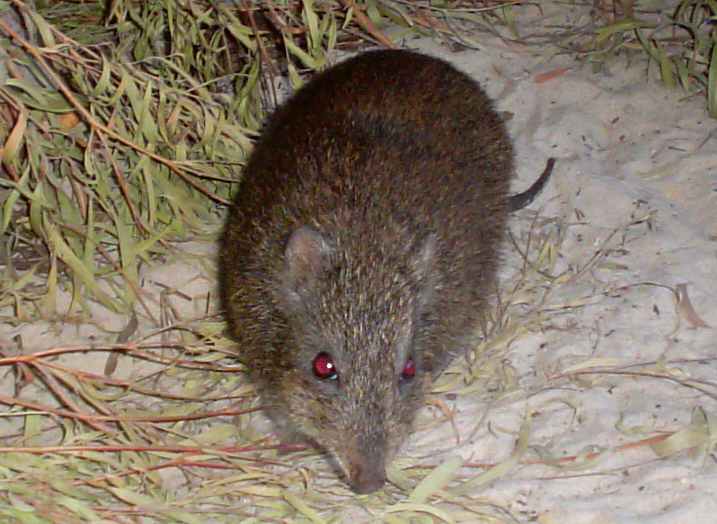
Photo: Wikimedia Commons (CC) via https://en.wikipedia.org/wiki/Northern_bettong
Overview
Bettongia tropica is a small marsupial in the family Potoroidae, weighing around one kilogram, with a compact body, powerful hind legs adapted for hopping, and a prehensile tail used to carry nesting material. It is primarily nocturnal, sheltering by day in grass nests and foraging at night, largely for the fruiting bodies of underground fungi, which form the bulk of its diet. In this role it functions as an important disperser of mycorrhizal fungal spores, supporting soil health and nutrient cycling in the forests and woodlands it inhabits.
The species is restricted to a small area of northeastern Queensland, Australia, where it occupies a mosaic of habitats including tropical moist lowland and upland forest edges, wet sclerophyll forest, savanna woodland, and adjacent riparian corridors along permanent streams, along with occasional use of caves and subterranean shelter sites.
Its decline is driven by a combination of pressures: clearing and conversion of habitat for livestock grazing, altered fire regimes and inappropriate fire suppression practices, road construction fragmenting populations, predation and competition from invasive species, and hunting and trapping. Drought conditions and broader habitat shifting linked to changing land use compound these stresses, while accumulation of solid waste in habitat areas presents an additional, less understood pressure.
Conservation efforts include habitat protection within reserves and national parks, fire management programs designed to maintain suitable understorey conditions, monitoring of known populations, and predator control in some areas. Research continues into the species' fungal food sources and habitat requirements to guide management.
The population is small, fragmented, and continuing to decline. Without sustained habitat protection and fire and predator management, the long-term outlook remains precarious, consistent with its current Endangered listing.
The Northern Bettong faces pressure from land being cleared and altered for cattle grazing and logging, along with roads that fragment its habitat and put animals at risk from vehicle strikes. It is also threatened by inappropriate fire patterns, competition or predation from invasive species, illegal hunting and trapping, and drier conditions linked to droughts. These combined pressures appear to be ongoing and stable rather than clearly increasing or decreasing.
Habitat
Conservation measures underway
Other threatened species in POTOROIDAE
Threatened in Australia
Frequently asked questions
Why is Northern Bettong classified as Endangered?
Where does Northern Bettong live?
What are the main threats to Northern Bettong?
Get weekly conservation intelligence
One short digest a week of the most striking species and country data we ship, plus breaking conservation news paired with our database where it matters.
Free, no spam. One-click unsubscribe in every email.