Long-footed Potoroo
Potorous longipes
Overview
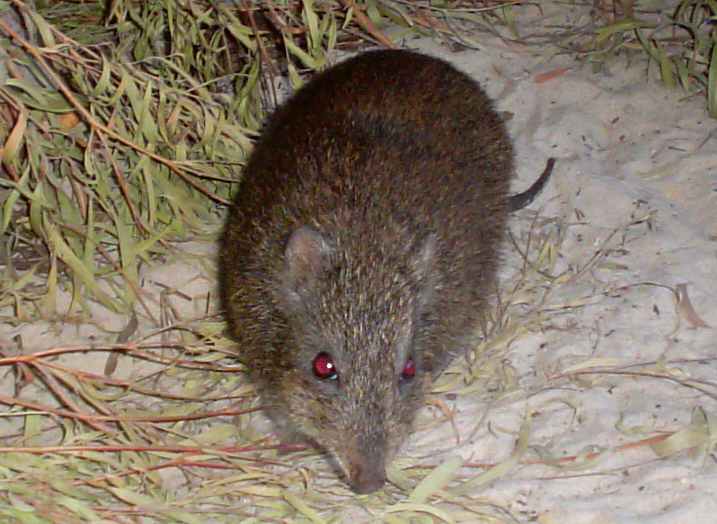
Potorous longipes is a small, hopping marsupial in the rat-kangaroo family, distinguished by disproportionately long hind feet relative to its close relatives. It has grey-brown fur, a pointed muzzle, and a moderately prehensile tail used to carry nesting material. Primarily nocturnal, it digs for hypogeal fungi, roots, and invertebrates, making it an important disperser of mycorrhizal fungal spores that support forest soil health and tree root systems.
It typically shelters by day in dense vegetation or, where available, near cave entrances and rocky outcrops.
The species is restricted to south-eastern Australia, with fragmented populations in eastern Victoria and far south-eastern New South Wales. It occupies wet and damp sclerophyll forest with dense understorey cover, occasionally extending into subterranean or cave-associated microhabitats.
Its decline is driven by ongoing logging and timber harvesting that removes understorey cover and disrupts soil fungal communities, altered fire regimes and post-fire habitat loss, predation by introduced red foxes and feral cats, and drought conditions that reduce fungal food availability. Habitat alteration from land-use change and, in some areas, disturbance linked to freshwater resource harvesting further compound pressures on isolated subpopulations.
Conservation responses include predator control programs targeting foxes and cats, protection of known habitat within forest management plans, fire management planning aimed at retaining unburnt refugia, and ongoing population monitoring to track distribution and abundance. Some populations occur within reserves offering greater habitat security.
Population numbers remain low and fragmented, and the overall trend is decreasing. Continued habitat disturbance, predation, and climatic pressures suggest the species remains vulnerable to further decline without sustained management intervention.
The Long-footed Potoroo faces significant pressure from logging and timber harvesting that removes and fragments the forest habitat it depends on, along with wildfires and the challenges of managing controlled burns in its range. It also struggles with competition or predation from introduced species, shifting habitat conditions, and periods of drought that reduce food and shelter availability. These threats are all currently ongoing, suggesting the pressures on this species remain steady rather than easing.
Habitat
Conservation measures underway
Other threatened species in POTOROIDAE

Threatened in Australia
Frequently asked questions
Why is Long-footed Potoroo classified as Vulnerable?
Where does Long-footed Potoroo live?
What are the main threats to Long-footed Potoroo?
Get weekly conservation intelligence
One short digest a week of the most striking species and country data we ship, plus breaking conservation news paired with our database where it matters.
Free, no spam. One-click unsubscribe in every email.