Craterocephalus fluviatilis
Overview
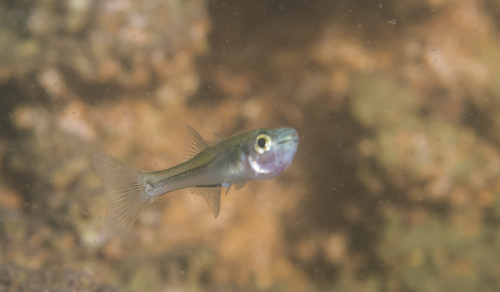
The Murray hardyhead is a small freshwater fish, typically reaching around 6–8 cm in length, distinguished by its silvery body, large eyes, and slender build characteristic of the Atherinidae family. It is a schooling species, generally feeding on zooplankton, algae, and small invertebrates. As a small-bodied prey fish, it plays a role in freshwater food webs, supporting larger native predators where populations remain intact.
Endemic to Australia, the species historically occurred throughout the lower Murray-Darling Basin, including parts of South Australia, Victoria, and New South Wales. It inhabits still or slow-flowing freshwater habitats such as wetlands, billabongs, swamps, and lake margins, often favoring habitats with some salinity tolerance not typical of most freshwater fish.
The species' decline is driven by river regulation and dam construction, which have altered natural flow regimes and fragmented habitat. Water extraction for agricultural and urban use has reduced wetland connectivity and availability, compounded by drought and, paradoxically, damaging flood events. Invasive fish species, particularly eastern gambusia, compete with and prey on the hardyhead.
Agricultural runoff and industrial effluents degrade water quality, while rising water temperatures linked to climate change add further pressure. Its range has contracted to a small number of isolated wetland refuges.
Conservation efforts include captive breeding and translocation programs to establish insurance populations, habitat management within refuge wetlands, and monitoring of remaining populations across South Australia and Victoria. Some sites have targeted control of invasive fish species.
Despite these measures, the species remains classified as Critically Endangered with a decreasing population trend, and its long-term persistence depends on sustained habitat management and expansion of secure refuge populations.
This small fish is struggling because dams and water extraction are altering and cutting off its river habitats, while pollution from farms, industry, and logging is contaminating the water it depends on. It also faces added pressure from competing non-native fish, along with droughts, floods, and warming water temperatures linked to climate change. These combined threats are ongoing and show signs of intensifying, particularly as climate change worsens water conditions.
Habitat
This species inhabits clear, flowing freshwater streams and rivers with rocky or sandy substrates in southeastern Australia. It requires well-oxygenated waters with stable temperatures and minimal siltation for successful reproduction and feeding.
Conservation measures underway
Other threatened species in ATHERINIDAE


Threatened in Australia
Frequently asked questions
Why is Craterocephalus fluviatilis classified as Critically Endangered?
Where does Craterocephalus fluviatilis live?
What are the main threats to Craterocephalus fluviatilis?
Get weekly conservation intelligence
One short digest a week of the most striking species and country data we ship, plus breaking conservation news paired with our database where it matters.
Free, no spam. One-click unsubscribe in every email.