
Mugger
Crocodylus palustris
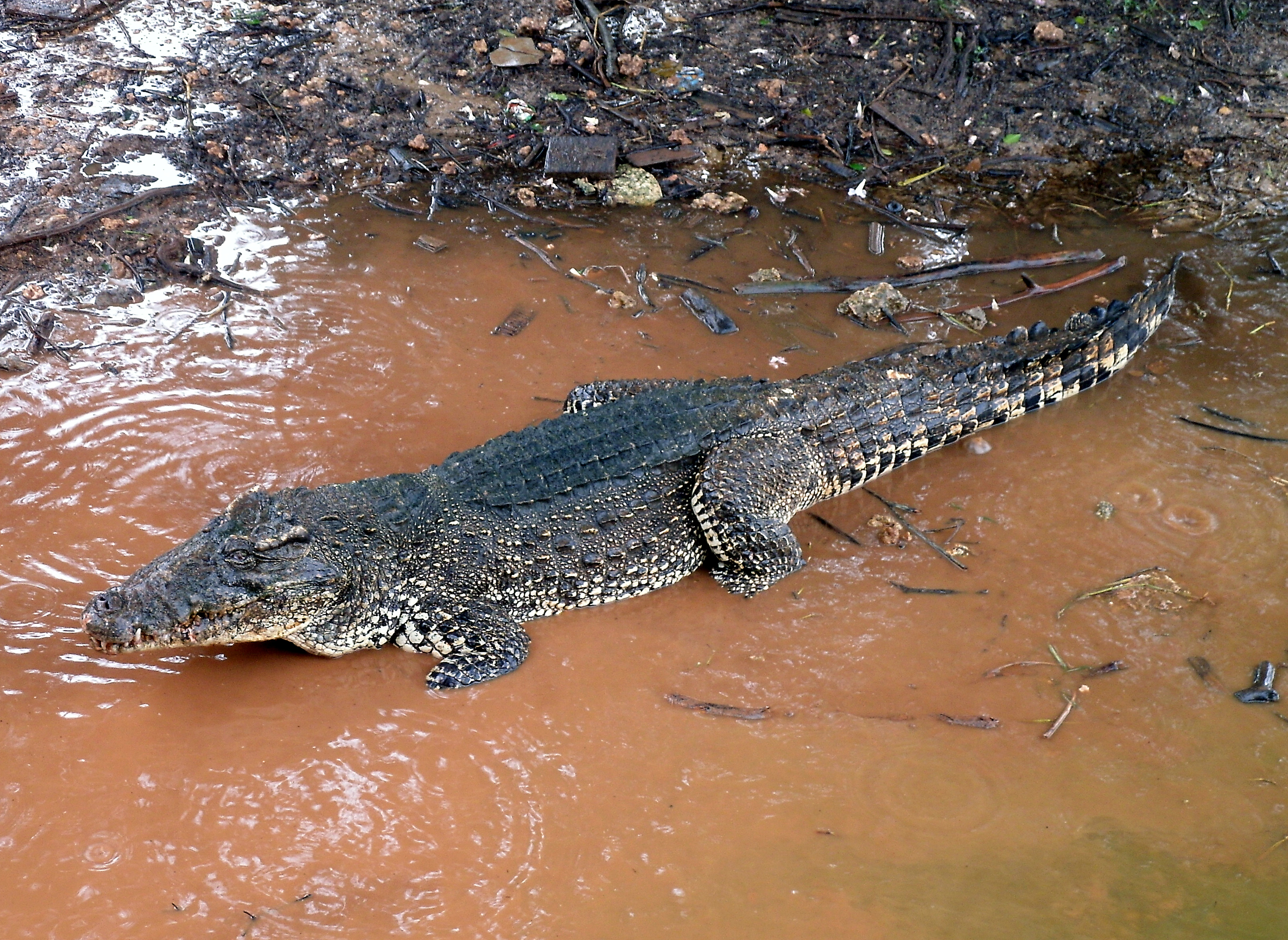
Photo: Wikimedia Commons (CC) via https://en.wikipedia.org/wiki/Mugger_crocodile
Overview
Crocodylus palustris (Mugger Crocodile)
The mugger crocodile is a medium-sized crocodilian species reaching lengths of 3-4 meters, with a broad snout adapted for catching fish, amphibians, and small mammals. Distinguished by its robust build and relatively short legs, this species exhibits strong territorial behavior and plays a crucial role as an apex predator in freshwater ecosystems, helping maintain fish population balance and nutrient cycling through wetland systems.
Mugger crocodiles inhabit freshwater environments across South Asia, from Iran through the Indian subcontinent to Myanmar and Sri Lanka. They prefer slow-moving rivers, lakes, marshes, and irrigation canals, though they can tolerate brackish coastal waters. Their range spans eight countries, with the largest populations concentrated in India and Sri Lanka.
The species faces significant pressure from hunting and trapping for skin and meat trade, despite legal protections in most range countries. Agricultural expansion, particularly crop cultivation, has resulted in widespread habitat loss and fragmentation. Logging activities further degrade riparian forests essential for nesting sites, while dam construction and water diversion projects alter natural flow regimes critical for breeding cycles.
Conservation efforts include captive breeding programs in India and Sri Lanka, habitat restoration projects, and community-based protection initiatives. Several countries have established protected areas specifically for crocodile conservation, while international trade restrictions under CITES help control commercial exploitation.
Currently classified as Vulnerable with stable population trends, the mugger crocodile's outlook remains cautiously optimistic where active management occurs. However, continued habitat pressure and human-wildlife conflict in densely populated regions pose ongoing challenges to long-term recovery.
The mugger crocodile faces three main threats that are all currently happening. People hunt and trap these crocodiles for their valuable skin and meat, while farmers clear their wetland habitats to plant crops like rice and sugarcane, and loggers cut down the forests along rivers where crocodiles live. All of these threats appear to be ongoing at steady levels rather than getting worse or better.
Habitat
Conservation measures underway
Other threatened species in CROCODYLIDAE


Threatened in Bangladesh



Frequently asked questions
Why is Mugger classified as Vulnerable?
Where does Mugger live?
What are the main threats to Mugger?
Get weekly conservation intelligence
One short digest a week of the most striking species and country data we ship, plus breaking conservation news paired with our database where it matters.
Free, no spam. One-click unsubscribe in every email.